Unit 2: 1650-1789
What was worth fighting for?
CHY4U Unit 2 Handouts 2022 (PDF of the unit package – this has obviously been updated since then – I must not have made a PDF version for 2025-26 )
1. Enlightenment
THE AGE OF REASON?
Note to teachers: This section of the unit used to be a lot bigger. As I added more non-western content, I decided to reduce the western thinkers and add in some comparisons with non-western figures such as Suleiman and Akbar (see #4 below). In this unit, it is very easy – and beneficial – to keep the unit question in mind the whole time!
1 Jean Calas anecdote – from this story, try to grasp the main concepts of the Enlightenment and what enlightened philosophes thought was worth fighting for.
Intro to Englightenment PSDs (contains list of enlightened characteristics)

2. Locke: read this for context on the social contract and types of government in Europe
Locke_handout_shortened (skipped 2023 and 2025-26)
3. PSDs – please annotate, looking for connections to enlightened characteristics. Answer the questions below, or at least follow them as they provide clues to what is important.
Questions:
Political: John Locke, Two Treatises on Government; Thomas Jefferson, The Declaration of Independence
In what way did Jefferson ‘plagiarize’ Locke?
English: Olaudah Equiano, The Interesting Narrative of the Life of Olaudah Equiano, Mary Wollstonecraft, A Vindication of the Rights of Woman, 1792
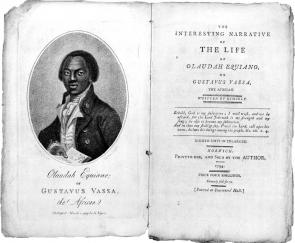

Questions:
What did Equiano hope the British government would do?
Under what condition did Wollstonecraft believe society would improve?
French: Voltaire, Superstition; Denis Diderot, Definition of Intolerance
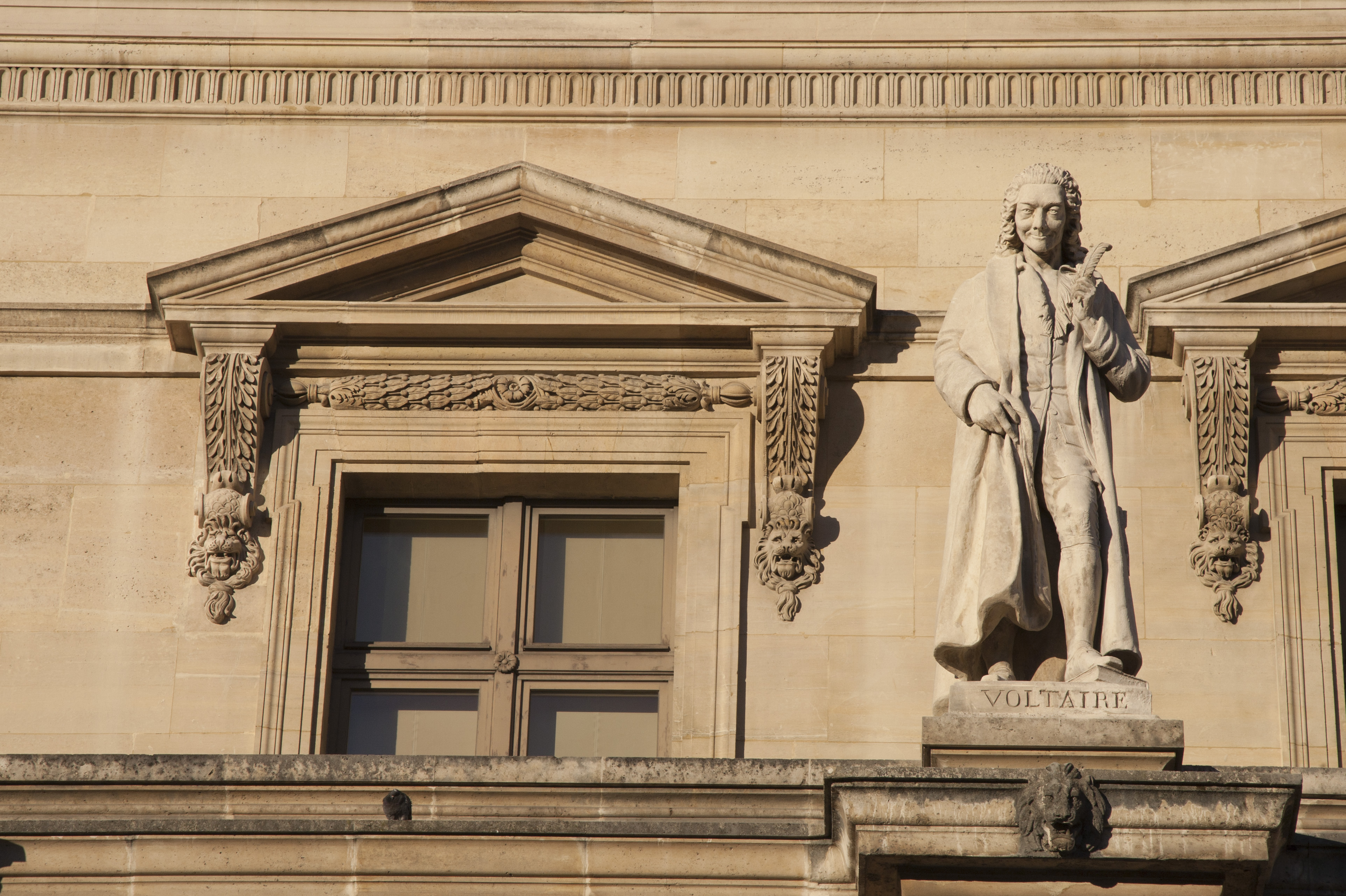
Questions:
Diderot repeats the word ‘impious’ (blasphemous – against religion) over and over. Why is he using this religious word against the Catholic Church? Think literary styles.
What is Voltaire’s big problem with superstition?
Ruler (Enlightened Despot): Catherine the Great, Proposals for a New Law Code, 1767
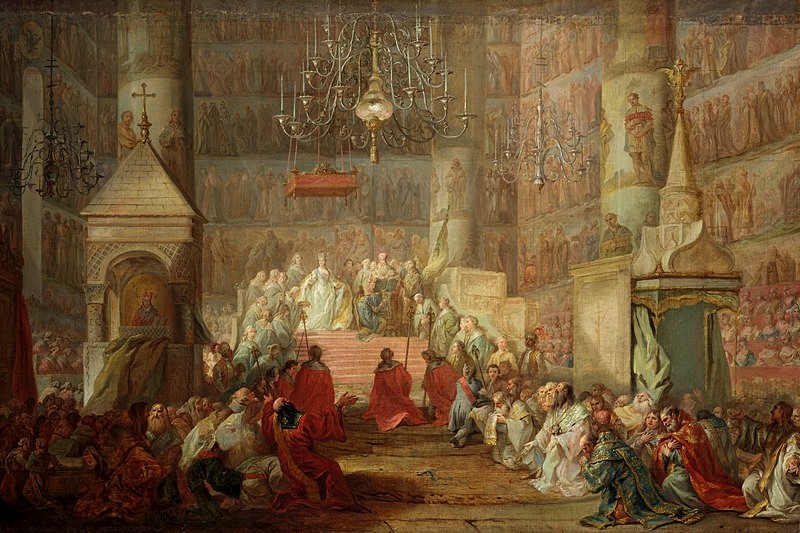
Questions:
Catherine spends a lot of time arguing why absolute monarchy is suitable for Russia. How does she justify it? Is there anything enlightened in Catherine’s words/intentions?
Debriefing/Wrapping Up Enlightenment Thinkers
Note to teachers: I have had many ways of doing this over the years, and student teachers have had theirs as well. There’s obviously no right or wrong way. It’s just important to debrief / wrap up.
Options:
- Ranking from most to least adherence to enlightened characteristics
- Connecting to today – relevance: Ms. K did something similar with different thinkers tweeting or posting on Instagram
- I put myself in role as Diderot and claim that I am hiring new writers for my “Encyclopedie.” Student groups are given topic choices (usually people we have studied already in the course such as Columbus, Cortes, Locke, Jean Calas, maybe Galileo, etc. – or you can come up with your own). They have to write in the Diderot style – somewhat sarcastic – but the enlightened message has to come through. They also have to make sure to get the perspective somewhat correct: not presentist but taking into the account some of the biases (e.g., contradictions of the Enlightenment). Each group shares their write-up and the other groups (and I) score them on style and content. My last class ever did a fantastic job. Note: Since the Diderot writing they read was rather sarcastic about religion, many of them took that tone as well.
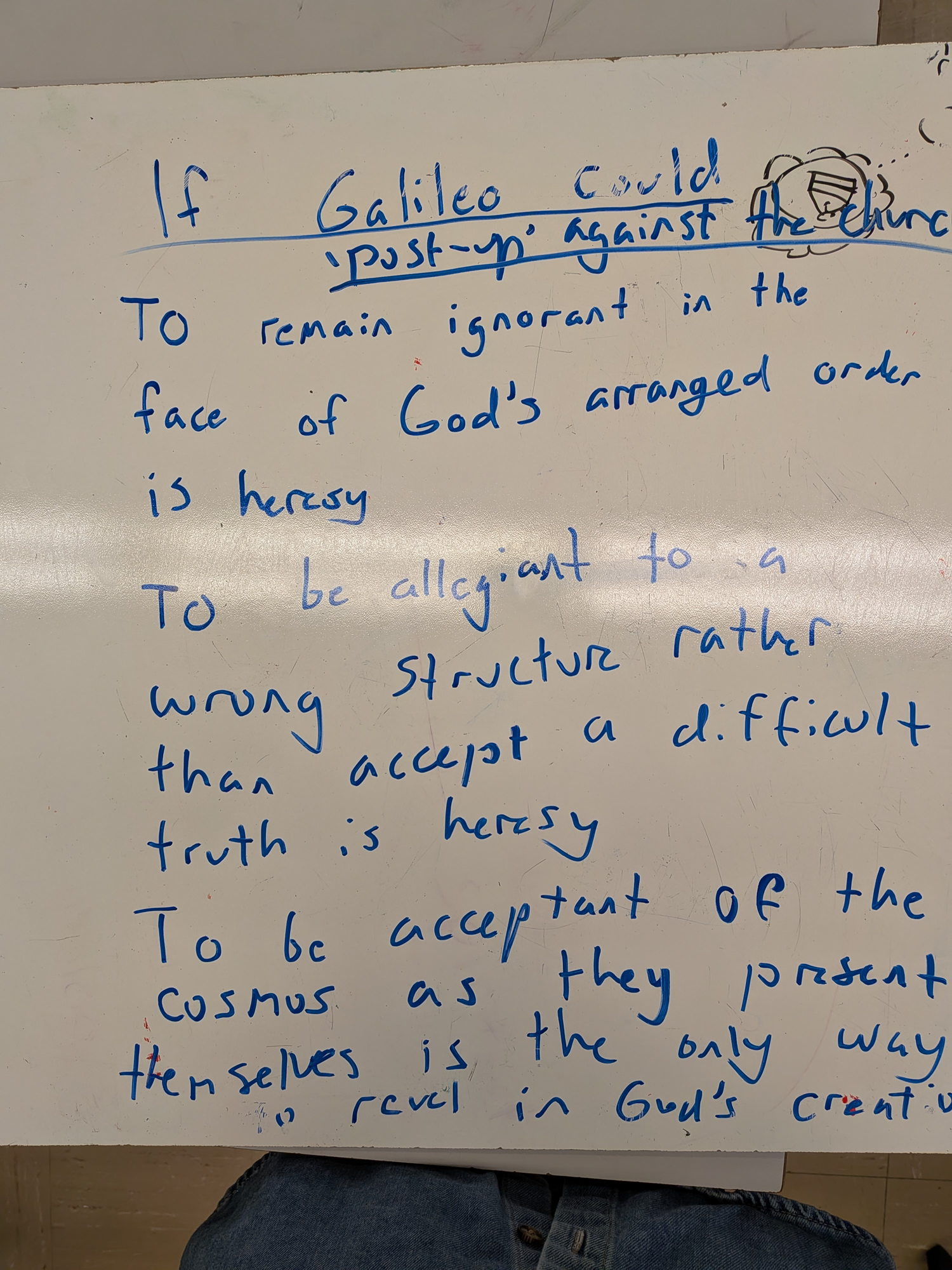
ARGUMENT PRACTICE – this is from an old written assignment where students had to write about a subject in the style of Diderot.
Practice making arguments. Read this and see how you can make it a little bit better by making a sharper topic sentence: (I no longer spend so much time on the enlightenment philosophes; instead, I focus on the paradox of enlightenment and enslavement)
Denis Diderot was one of the main social critics of his time, particularly when it came to the abuses of the Roman Catholic Church. In an article from his multi-volume Encyclopedie called “Intolerance” Diderot portrayed the Catholic Church as hypocritical. In fact, he argued, the Church was intolerant. Diderot and other enlightened philosophes in France held a core belief in freedom of thought; as he said, “Conscience must be enlightened, not constrained.” Neither the state nor the Church should interfere with an individual’s right to his own beliefs and ideas. The problem with the Catholic Church was that it used pacifistic language such as love when in fact it used violent means to achieve its goals. According to Diderot, “Education, persuasion, and prayer, these are the only legitimate means of spreading the faith.” How hypocritical, he implied, was the Church for using violence, hatred, and sowing of division to spread Christianity. These two simple quotes portray Diderot as a hard-edged writer willing to speak his truth to power.
Here’s an interesting little tidbit on Diderot and Catherine the Great- you decide if it made her enlightened at all???
Denis Diderot and Catherine the Great of Russia came together out of necessity. Diderot’s Encyclopedie was heavily censored by the Roman Catholic Church and the French government. The pope even threatened excommunication of purchasers of it (World History, p. 449). At the time in the 1700s, France was still relatively feudal* in its social structure, though people like Diderot from the upper middle classes had a certain amount of influence in intellectual circles. Diderot was so involved in the Enlightenment that he was chased by the police, spied on, and even had to sell his works to the Empress of Russia, Catherine the Great, in order to save them from government confiscation. Catherine, seeing herself as an enlightened ruler, allowed him to retain the books and she paid him a yearly salary. He even went to visit her in Russia for six months in 1773 (Glencoe World History, p. 557). Catherine and Diderot: an likely pair but a duo who found mutual benefit in each other.
*feudal refers to the social structure of western Europe in the Middle Ages in which the wealthy lords owned the land and the poor serfs worked the land. They were stuck in a feudal relationship that, on paper, gave them some benefits, but in reality kept them from moving forward.
4. Did western Europe have a monopoly on enlightenment?
Note to teachers: Here I had students divide into groups and do a bit of guided research (using TDSB Virtual Library sources) on two non-western figures. It’s really important to pass on to the students the idea that Europe was never really the centre of the world. After students share, they can answer the big question: Did the western world have a monopoloy on enlightenment?
Western_World_Monopoloy_on_Enlightenment
- How do Akbar and Suleiman compare to our western European thinkers?
- Are there other characteristics of enlightenment we should now add to our list?
- How does learning about Akbar and Suleiman contribute to your understanding of the limits of western enlightenment? Does it reinforce the paradox?
2. Enslavement and Resistance
Note to teachers: I have worked on this part of the course more than any other, probably because this is the unit where student teachers were present and becaues it’s so meaningful to me. It is so crucial to the overall direction of the course.
1 Introduction to the Trans-Atlantic Slave Trade
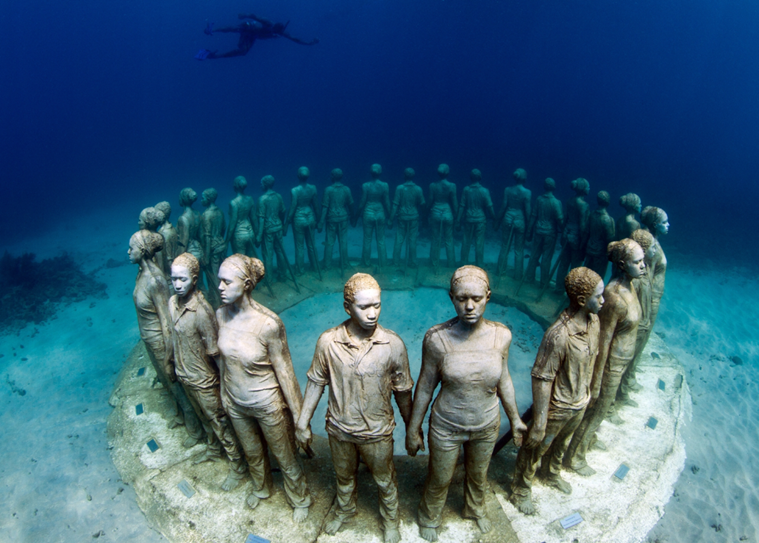
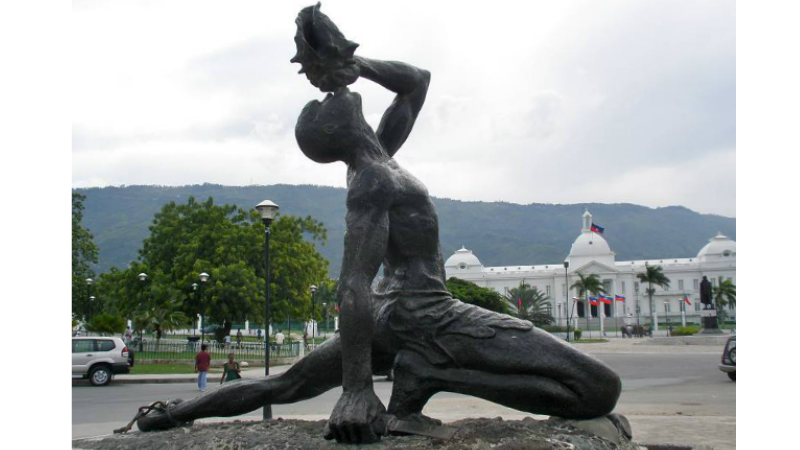
Minds On: What do you think the underwater sculpture above is meant to represent? Back to your earlier definition of what the word “fight” means in “what is worth fighting for?” Now we are adding the idea of resistance. What is the difference between fighting and resisting?
Skills: historical perspective, inquiry questions
terminology: slave vs. enslaved person
- it is extremely important to choose terms carefully as we must fully humanize, not objectify, the people we are studying. I prefer to use the more modern terms enslaved, enslaver.
Task: To Humanize
Slave Trade interactive map, reading by Ms. G from The Slave Ship
CHY4U Slavery and Resistance Intro Handout
Students are asked to come up with good, curious, deep inquiry questions while viewing the interactive slave trade map. Remember, these ships were filled with humans. This website was included in the original E learning course. It is so incredible.
Note to teachers: While introducing this map, I play it once without saying anything other than what the dots are (ships) and that they’re clickable. I ask students to notice the years ticking by and also to notice the direction of the dots and their origins. Students watch in pairs or very small groups and replay the map many times. Eventually I start to give them more hints if they’re not picking up on the complexities of the map.
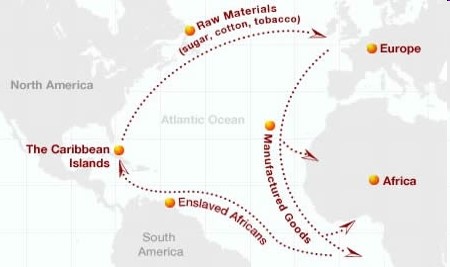
Triangular trade
2 Resistance
Note to teachers: the Resistance aspect of this topic is absolutely crucial for understanding the importance of agency.
Task: take notes on methods of resistance by enslaved persons from pages 108 to 111 in the textbook. Then, put them into categories (such as physical, spiritual, etc.)
Note to teachers: Normally at this time I would emphasize how some historians used to dismiss things such as working slowly or breaking tools as evidence of the enslaved people’s laziness. Over time, historians have opened up their perspectives to recognize that the enslaved people were doing whatever they could to survive a brutal life, resist conditions imposed upon them and assert their humanity. Recall, this is related to historiography and of course, to change. The study of history is not static.
Websites for your interest:
Ted Talk (drumming banned – for your interest )
Slave Resistance at Work (Port Cities Bristol)
3 Code Noir
Minds On: What is the purpose of a law code? Do laws usually reinforce continuity and/or are they the leading edge of change?
Tasks:
- Fill in Code Noir Chart using the PSD in the purple box on page 109 of the textbook (see photos above) – it is part of the actual Code Noir (excerpts), the set of laws the French created to govern the enslaved people in French colonies.
- Note: the preamble (intro) says that God approves of these laws. Therefore, it’s as if God was saying to the enslaved people of the French colonies that they MUST obey the laws in the Code Noir. Also note, this code applied to the French colonies only.
2. How enlightened was Code Noir, if at all? (0-10) Explain your rating.
3. How generous did the French government think the code was given France was the western European hom of the Enlightenment? (0-10) Explain your rating.
4. Ultimately, in the unit so far, how enlightened is the enlightenment? Think about the paradox or the gap between ideas and reality. Please write a sharp, concise yet precise two-sentence answer.
Code Noir, https://en.wikipedia.org/wiki/Code_Noir (Our version is from page 109 in the textbook in the reading above for Resistance)
Additional Questions on Code Noir:
- What do the articles in row 1 have in common? Why was religion such a big deal in this code? On the one hand, if a slaver converted his enslaved people to Christianity, what is this admitting in terms of their humanity? On the other hand, if the slaver teaches that Christianity says you’ll get into heaven if you’re obedient, how can this reinforce slavery?
- What do the articles in row 2 have in common? Why was control of family such a big deal in this code? Was there any empathy? Does that make the code enlightened at all?
- What do the articles in row 3 have in common? Why were there provisions for how enslaved people should be involved in the “justice” system? Was there actually justice for them?
4 Code Noir and Canada’s History:
Note to teachers: For many years, I taught World History without incorporating Canadian history. BAD. I only started to think about making revisions when I read The Possession of Barbe Hallay by Mairi Cowan, which is set in Quebec in the 1600s where witchcraft was real. Her introduction reminded me that Canada is part of world history.
See this article for suggestions. Ms. K, my 2025 student teacher, did a great lesson on Marie Joseph Angelique connecting to the Code Noir in Canada. I built on that work in 2025-26.
Legacy of the Atlantic Slave Trade:
- see this article from The Guardian newspaper about its founder’s link to the slave trade.
- Also, many parts of the United States are debating and discussing reparations (repayments) for slavery.
- See this article from PBS about California’s debate (March 2023).
5 Resistance: St. Domingue / Haiti and the Haitian Revolutions
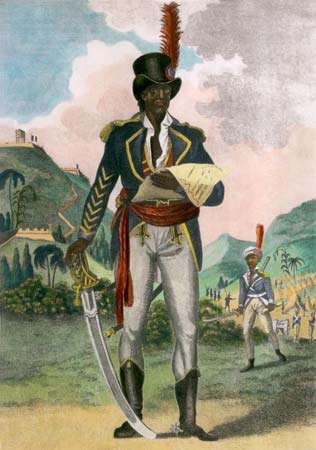
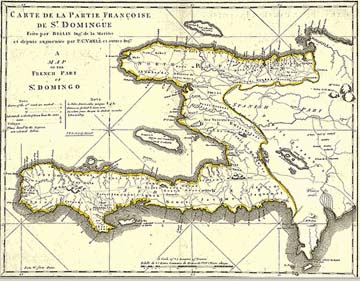
Recall, the Code Noir would have been the document that governed the lives of enslaved people in the French Caribbean colony of St. Domingue.
Resource: Haitian Revolutions slides
A: To understand the Haitian Revolutions (yes, more than one revolution) context please read the two documents below and answer these questions on BIG ideas (then details will follow):
1 CHY4U Social Hierarchy in St Domingue,
- where do you expect the major class conflicts to have been?
- which social group do you think would have started the rebellion?
2 CHY4U Slave Revolution that Defeated Three Empires
- why did three empires try to so hard to defeat St. Domingue/Haiti?
- how/why were the Haitians able to prevail?
- what does this tell you about resistance and what is worth fighting for?
- do you think this revolution inspired others? Hint: look at the dates of other revolutions in Central America and South America.
B: Then, to get more details, read about Toussaint L’Ouverture and the rebellions in St. Domingue/Haiti (textbook pages 195-197). Note that the origins of the first revolution (starting in 1791) are quite complicated and resulted in the freeing of the enslaved peoples after much struggle and agency on their part. The second one (ending in 1804) was the fight for independence from France which was also long, drawn out, difficult, and complicated.
Haitian Constitution
In 2025, Ms. K, my excellent student teacher, did a great lesson on the Haitian Constitution. I adapted her work in 2026. It’s a complicated aspect of the Second Haitian Revolution that requires careful study, especially pertaining to its timing and its faults. Most importantly, students must know that it was more aspirational than in place as a governing document because Haiti was still at war with France. See slides linked above.
Additional Resources if desired
Visit Haitian Revolution (Black Past) or The Haitian Revolution (PBS – Africans in America) if you want short overviews of the Haitian Revolutions. There is a Crash Course History video (12 minutes) as well. In it there is some reference to the French Revolution (which we haven’t learned about yet) but you should be able to get the big picture without this fore-knowledge.
Wrapping Up Enslavement and Resistance
Note to teachers: It’s really important not to just end a topic and move on, especially one as crucial as enslavement and resistance. Again, we want students to not just feel bad about enslavement and the entire topic. We want them to see that throughout history, people who were definitely victims were also agents and found ways to not only survive but make a difference. I have done this many ways over the years, but in my last year of teaching I brought back an old strategy: museum display. My class was so inquisitive, I thought they would not only like it, but do it very well. On another note, also being a grade 11 World History teacher, I really like to incorporate material objects, not just written documents.
Task: Class Museum Display
I divided the students into five groups and gave each group a sub-topic.
I provided links, in addition to everything they had on the Google Classroom, focusing on material objects that they were to select from for their display. I actually had laminated pages from years past when Museum Display was a marked evaluation. Many of the objects were from Slave Resistance at Work (Port Cities Bristol).
Each group was to create a display on their whiteboard (the large whiteboard papers that can be hung up). They taped images to their display. They also had to write a thesis for their sub-topic. The groups rotated around while someone stayed back to ‘share’ their museum display. In the end, we were supposed to write a class thesis incorporating all of the sub-topics, but we never quite got there.
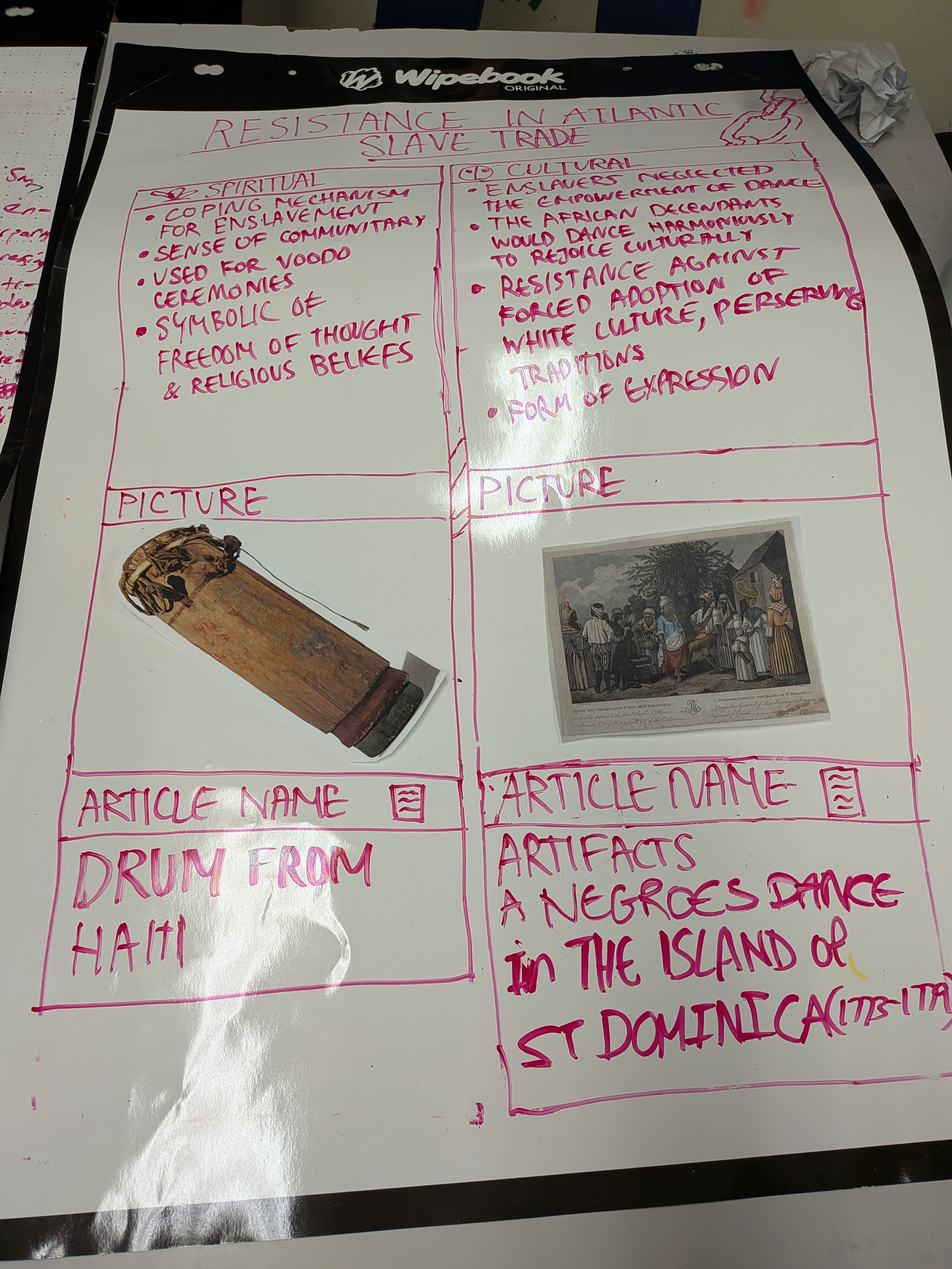
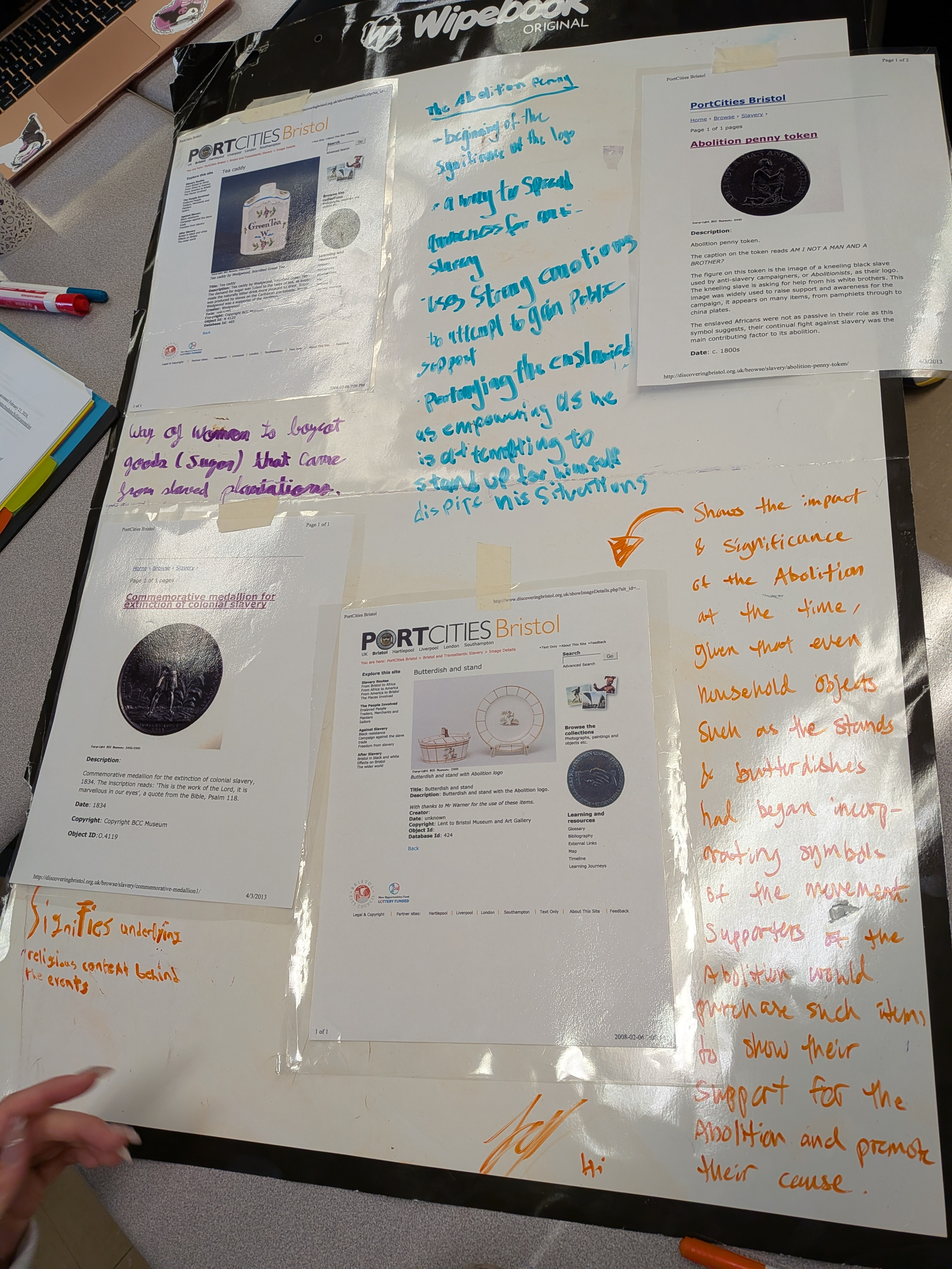
CHY4U Unit 2, Class Museum Display – Thesis Statements
Sub-topics:
1 Capture and enslavement
2 The middle passage
3 Economy and profits from slavery
4 Forms of resistance to the slave trade and slavery
5 Abolition of the slave trade and slavery. Here I also gave the students access to a worksheet I designed many years ago on the abolition of slavery in the British Empire, once again highlighting the paradox of slavery and enlightenment, as the enslavers got compensation, not the enslaved.
Note to teachers: If you are interested and want to see my old Musem Display assignment from 2016, it’s linked here. If I were doing this as a marked evaluation these days I would make a few changes/additions to get students to focus on the limitations of certain material evidence and corroboration. I would also add a knowledge mark for incorporation of unit 2 concepts. You will see the assignment has three phases: construction, discussion (which is similar to Global Gathering in unit 1 where the students talk to each other and I listened in), and there was an HTC journal follow-up. Yes, I used to have the students keep an HTC journal.
3. Innovation and Origins of Industrialization
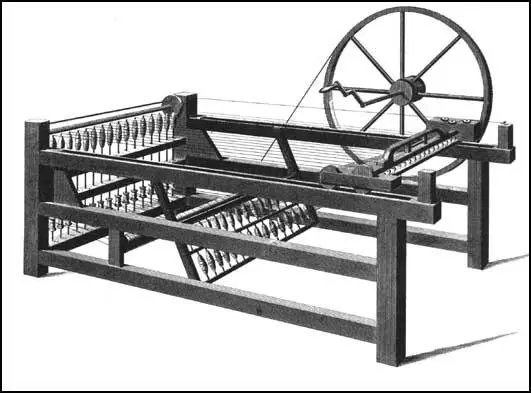
Note to teachers: The way I taught this topic changed immensely over the last 28 years. I used to do a really fun simulation in unit 3. But Covid caused a lot of changes. So I used the activity designed for the E learning course (this one I actually came up with) which focuses on the origins of industrialization rather than on full-on industrial life. The HTC focus is progress and decline (part of continuity and change). It also ties into mercantilism, colonization (especially India), and enslavement.
Minds On: How is society affected by the pace of technological change? Think about our own times: do you think we live in a time of fast-paced technological change? If so, what influence does it have on people’s lives, work, the economy, etc.? E.g., AI. Here I usually show some slides to demonstrate the kinds of technology I grew up with.
Skill: Progress and decline – the sometimes inverse relationship between those who progress and those who decline. Note that progress and decline are aspects of continuity and change.
Indian Cotton
Note to teachers: As you will see in the industrialization document linked below, one cannot just jump into British industrial origins in the 1700s. It is absolutely necessary to examine the cotton industry in India first. Students must understand that British mercantilism (a concept that may not have been used in the unit 1 time period but was definitely in place) paid no attention to the value of cotton to India, its farmers and hand weavers. They just wanted to control trade of it for their own benefit. Britain, too at first, wanted to protect its dominant industry – wool – from the new and popular import of Indian cotton; some very interesting documents are shown to demonstrate this. Eventually though capitalism won out and the consumers got what they wanted: cotton goods, and manufacturers in Britain applied the techologies that had been evolving over the past decades to increase productivity, ultimately providing jobs to many and changing their ways of life.
Introduction to Industrialization (British Case Study):
Industrialization began in Britain in the late 1700s. It began there, rather than elsewhere, for various reasons which are somewhat outside the scope of this activity. However, what’s crucial to know is that many people invested money in new technologies that would eventually power factories to produce a lot more goods, especially cotton textiles, than before. These new technologies pushed for more efficiency/productivity. The demand for goods was high because the population in Britain was growing quickly in the 1700s.
Before the industrial revolution British society was largely rural and the economy was based on agriculture. Power came from wind, water, animals and humans. Some farming families also worked in what was called ‘cottage industries’, meaning they engaged in a small trade at home to supplement their farm income. For instance, they might spin wool from their sheep into yarn (which actually involved far more steps than it sounds like). A middle man would help them get the yarn to market or to a producer who’d turn it into something like clothes or blankets. But work was at home and followed the regular schedule of daily life on a farm.
Change came … During the industrial revolution urban areas grew faster as people moved to live nearby their sources of employment – the factories. The sources of power eventually became coal and steam. Coal powered factories and mills where large numbers of workers gathered under one roof were new developments. Workers were now paid a wage, usually per day or week.
The woolen industry had been in existence for a long time in Britain. However, cotton was becoming increasingly popular. Britain did not, of course, grow cotton – it grows in a warmer climate. But some of Britain’s colonies (especially India) and trading partners (such as the US southern states after 1776) did grow cotton where it was often nurtured by enslaved people. Thus one cannot separate the topics of colonization, slavery and industrialization. This will become very apparent as you make your way through the chart in the unit 2 handouts. So will the fact that certain types of workers benefited more from industrialization than others. The world was changing and people’s lives were changing significantly.
I would have loved to add more on environmental history; we’ll see if I do a “fantasy” history lesson.
Tasks:
- It’s your choice if you want to do the full overview of industrialization first, or jump into the background. Here are the overview slides:
- Read Early Inventions of Industrialization first. It gives a lot of important background. Early Industrialization with Helped/Hurt chart.
- Fill in the chart: Early Industrialization Activity – who was helped and who was hurt by each innovation? The possible answers (groups of people) are indicated at the top of the activity. If you have access to the actual E learning course in Ontario, there should be a tool to use to complete the chart. There can be a class debate or discussion on which groups of people were most hurt. I don’t think there’s very much debate about helped.
- Remind students that they will learn about the political consequences of industrialization in unit 3 and to an extent, unit 4.
Progress vocabulary: benefit, evolve, develop, advance, improve, innovate, change…
Decline vocabulary: regress, recess, downfall, end, collapse, slide, devolve, suffer …
4. Consequences of Exploration and Colonization – Seven Years War in Asia and North America (big changes in 2023 and 2025 – each of my two fantastic then student teachers introduced great materials on the fur trade, HBC, and relations with Indigenous people)
Skills: HTC – causes and consequences (intended and unintended, direct, indirect, long-term, medium-term, short-term), historical perspectives
Note to teachers: Originally part of the E learning course (and a really good one, too, that used pieces of art as primary source evidence), I have changed this topic a lot over the years with the help of some fantastic student teachers. I asked them to find ways to incorporate Canadian history, specifically the Hudson’s Bay Company and relations with Indigenous people. They did such a good job that I left behind some of the original materials from the E learning course.
key terms:
- mercantilism (the economic policy in which countries seek to export rather than import, protect their own markets and industries, and make profit from their colonies)
- think of it like a pie: at the time, people believed there was a limited supply of wealth. Each country had its own slice of the pie. To their mind, the only way to increase the size of its slice of pie was to get it from another country, often through war.

Global conflict
Recalling mercantilism, it should make sense that what began as a minor war in Europe (for reasons that are not even very important to us) became a global conflict about getting more pie for each country (empire)!!! These various conflicts lasted from 1756-1763.
Activity:
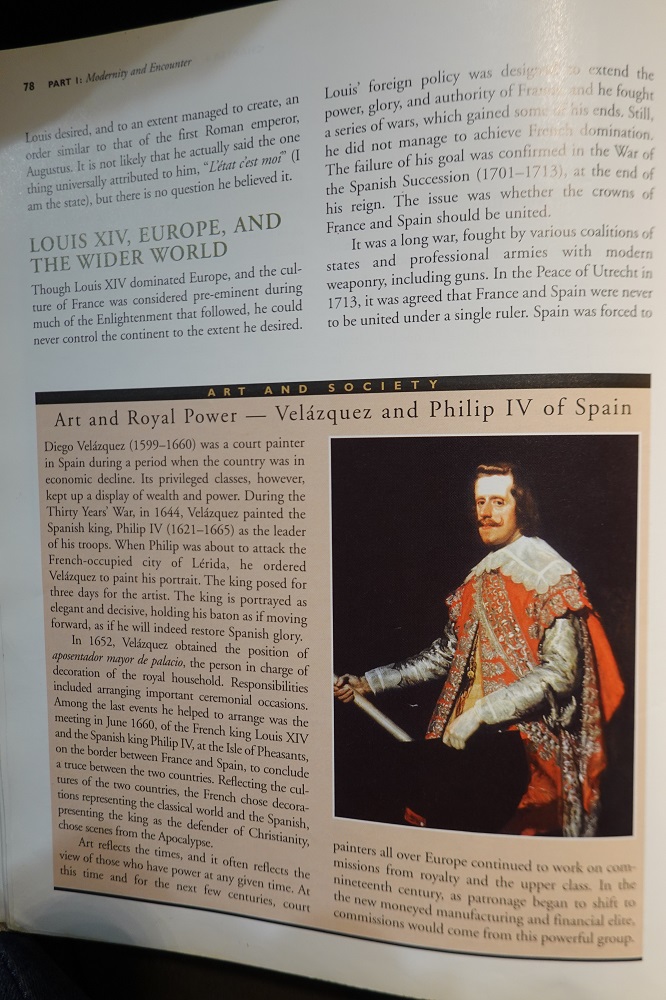
Below you will find the original primary source documents and short explanations from the E learning course. Of these, I only use the Battle of Plassey and the Royal Proclamation now (possibly the attack on Manila to show even further the global nature of the war(s)). The questions and answers are to help students work through the documents (I think I created those?) and to link to various aspects of causes and consequences.
1 The state of the English colonies, 1755 from the Maryland Gazette, originally published in London’s Gentlemen’s Magazine (not done 2023 and 2025)
Remember, this is pre-American Revolution. Virginia is one of the 13 American colonies controlled by Britain.
What are the advantages of Virginia in terms of agriculture, source of labour, government, education?
Who envies how awesome Virginia is? How does this relate to slices of the pie?
Cause or consequence of Seven Years War?
2 Painting: British victory at Plassey in Bengal, on June 23rd, 1757
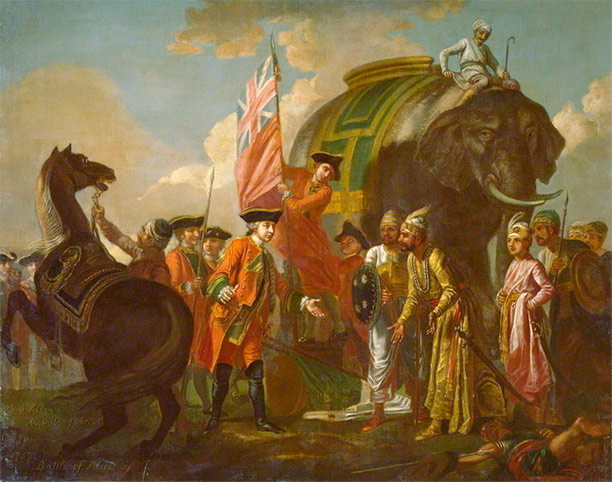
Note: Bengal was an Indian state. The British East India Company was established to increase trade between Britain and India.
Who fought whom in this 1757 battle?
How did the role of the British East India Company expand beyond trade after this battle?
Cause or consequence of Seven Years War?
3 The Battle of Quebec, 1759
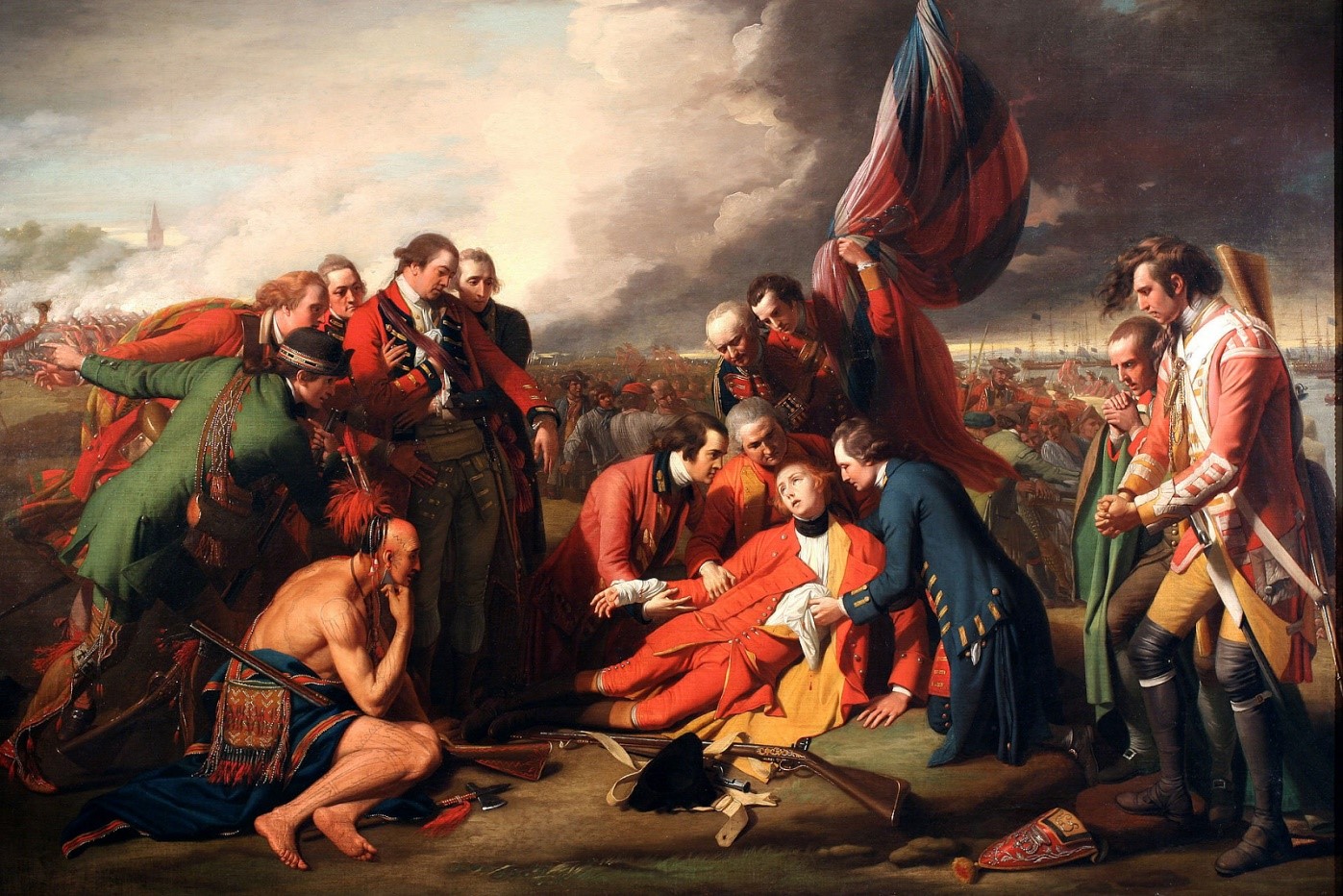
Recall your Canadian history lessons from junior high: The French came to Quebec first. Then, as the British increased their power and territory in North America they wanted Quebec, too. Eventually, the French lost other territory in North America, too. Also note that the painting was made years after the event.
Even though Wolfe (the British General) dies, how is he portrayed in the painting?
Whose slices of pie increase/decrease as a result of the Battle of Quebec?
Cause or consequence of Seven Years War?
4 Minavavana, a Chippewa chief, addressing trader Alexander Henry, as recorded by Henry, 1761
Note: Chippewa were one of many different indigenous peoples in North America in the 1700s. Indigenous peoples had diverse relationships with American colonists and the British and French in North America.
How many years before this letter had the English conquered the French?
In the beginning of the letter Minavavana suggests that Chippewa have been allies of _______________.
How does Minavavana suggest that, normally, good relations can be established after conflict?
Why did he make an exception this time?
Why would it be important for both indigenous people and the British or French to have each other as allies in North America?
Cause or consequence of Seven Years War?
5 The Attack of Manilla, October 1762

Note: Philippines was a Spanish colony. Spain was friendly with France, not Britain, at this time.
How did Philippines go back and forth to different ‘possessors’? How does this reflect slices of the pie?
What was the key factor in Britain’s success in this sub-battle of the Seven Years’ War?
Cause or consequence of Seven Years War?
6 Royal Proclamation of 1763
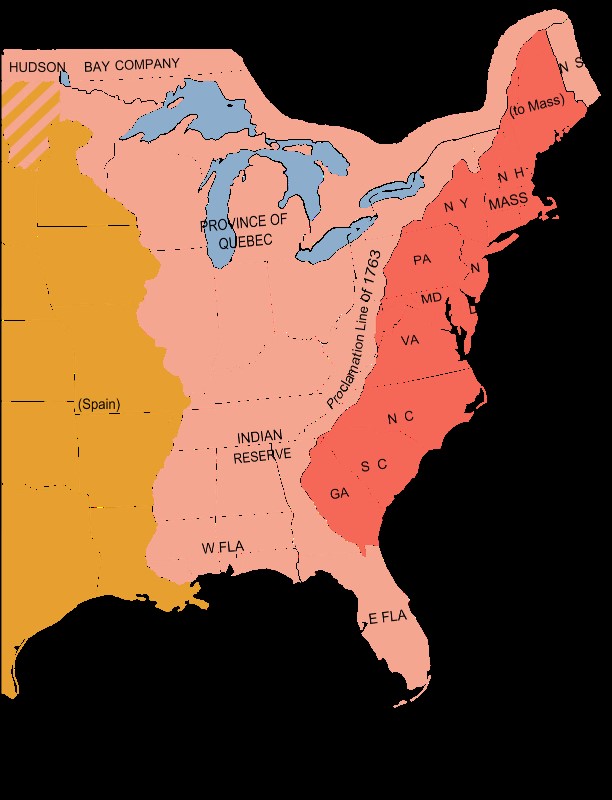
Note: the British took control of French territorial possessions following the Battle of Quebec (1759). These territories were not just in Quebec, but also included part of the now-US, including the Ohio River Valley. In addition, recall that at the time of this proclamation (law), the British controlled the American colonies. Through this law the British hoped to improve relations between American colonists and indigenous people west of the Mississippi River. So they created a line, the proclamation line. *
Lands west of the proclamation line were reserved for whom?
Who is forbidden to settle there or make any other use of the western lands?
Why would some American colonists be offended by this new British rule?
Why would the British feel this was a fair law?
How does this Proclamation relate to slices of the pie?
Cause or consequence of Seven Years War?
The Royal Proclamation has incredible significance for Indigenous peoples in Canada and the United States to this day. However, there are differing perspectives on this topic.
http://education.historicacanada.ca/files/31/Treaties_English.pdf
http://indigenousfoundations.arts.ubc.ca/royal_proclamation_1763/
7 The Quebec Act, 1774
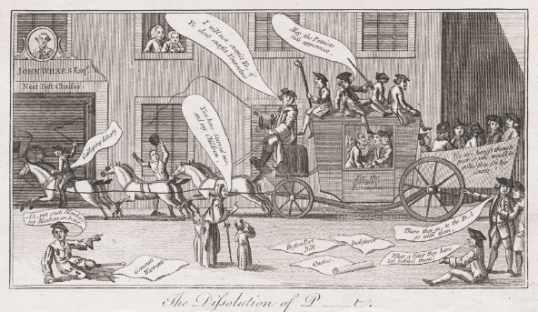
Note: the Seven Years War, known as the French and Indian War in the American colonies, was already over (1763) by the time of the Quebec Act (1774). Also, it’s important to remember that Britain was a Protestant country whereas Quebec had been Catholic. Most, not all, American colonists were also Protestant.
What did this act grant to Catholics in Quebec?
Why would the Protestant British want to do this?
Which part of the act particularly worried American colonists? Why?
How does the cartoon demonstrate this feeling?
Cause or consequence of Seven Years War?
4 The Hudson’s Bay Company and Indigenous People
Florence Marti created a strong overview about the creation of the Hudson’s Bay Company and a woman named Thanadelthur. Daria Karam expanded it with more about the fur trade. In my final year, I condensed the lessons but kept their main ideas. Daria’s slides are very long – they make incredible use of art as primary source evidence. In 2025-26 I didn’t use all of the content on the slides but made it available to the students.
HBC and Indigenous People – by Florence Marti
Resource from Canadian Geographic (students can determine if it’s missing key information)
HBC, the Fur Trade and Indigenous People – by Daria Karam
Note to teachers: Technically, this is the end of unit 2, at least as I did it. As always, it’s important not to just slide into the unit culminating activity but to make sure the students understand how the unit topics tie together. A good way to do that is go back to the unit question again: “What was worth fighting for?” So many perspectives on this question can be briefly summed up by students before moving on.
5. Timeline with Attitude Assignment –
For the unit culminating activity, see tips page
I really recommend that teachers read the UCA before starting the unit so they know where they are going.
6. Cultural Exchanges (New title: French Absolutism) – I haven’t done this topic for many years. It’s too bad because I had wanted to have more emphasis on Russian history in 2025 but didn’t get to it)
Absolutism: think back to what we learned about absolute monarchy at the very beginning of this unit. It was NOT the kind of government John Locke wanted because there were no limits on the monarch. Also note that Catherine the Great was an absolute monarch.
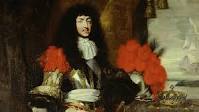
Louis XIV will serve as our model of an absolute monarch. Characteristics of absolutism include:
centralization (replaces decentralized feudalism)uniformity and fixed rules of behaviourstandardizationdevelopment of the statecontrol of power in the hands of the monarch/emperoroften based on the theory of divine right (the monarch is given the right to rule by God, NOT the social contract)often goes back to the Roman Empire as a model of stability
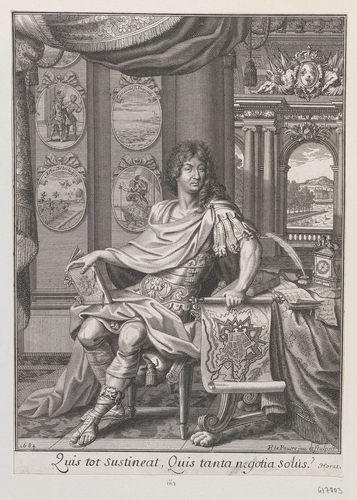
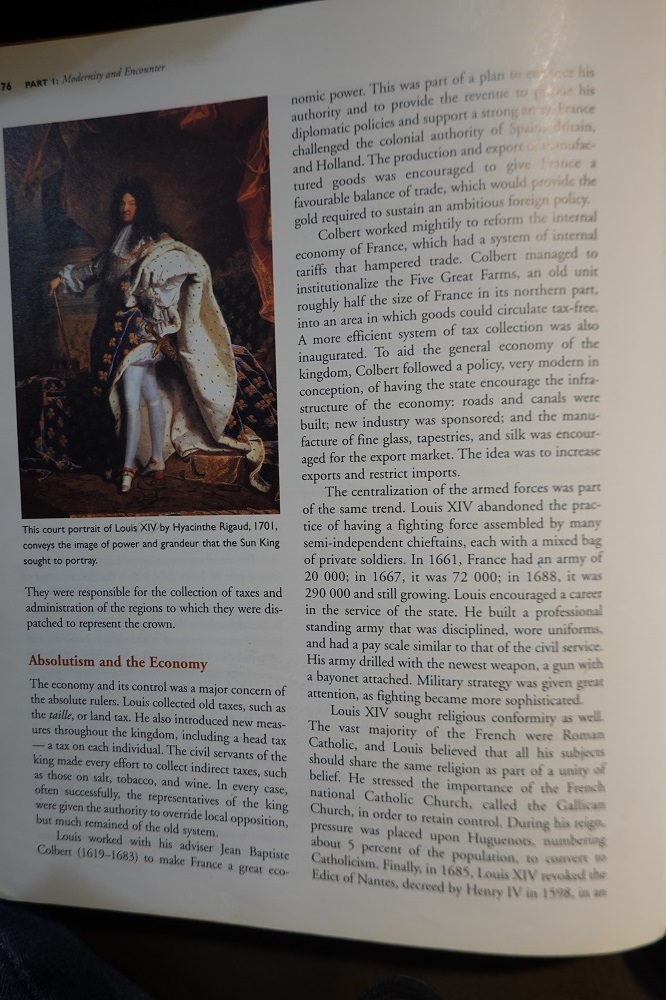
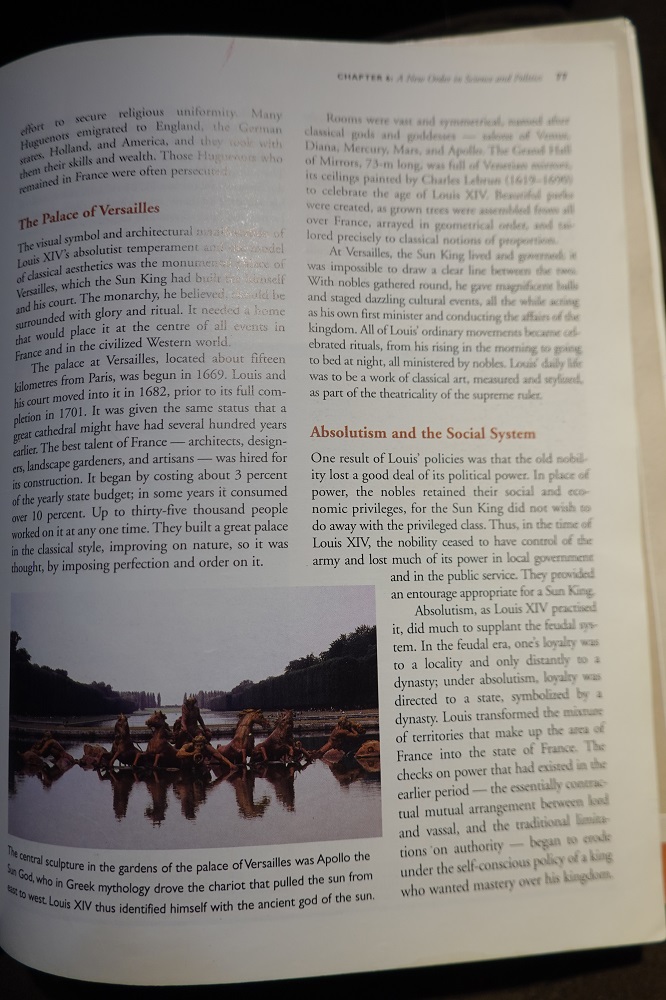
Information about the ways Louis used absolutism in France to make the country more centralized can be found in the textbook from pages 75-78 under these headings:
Take notes for each heading.
intendants (civil servants)economyarmed forcesreligionVersailles (see this video as well, only until 3:20)social system (role of nobles and others) * most important