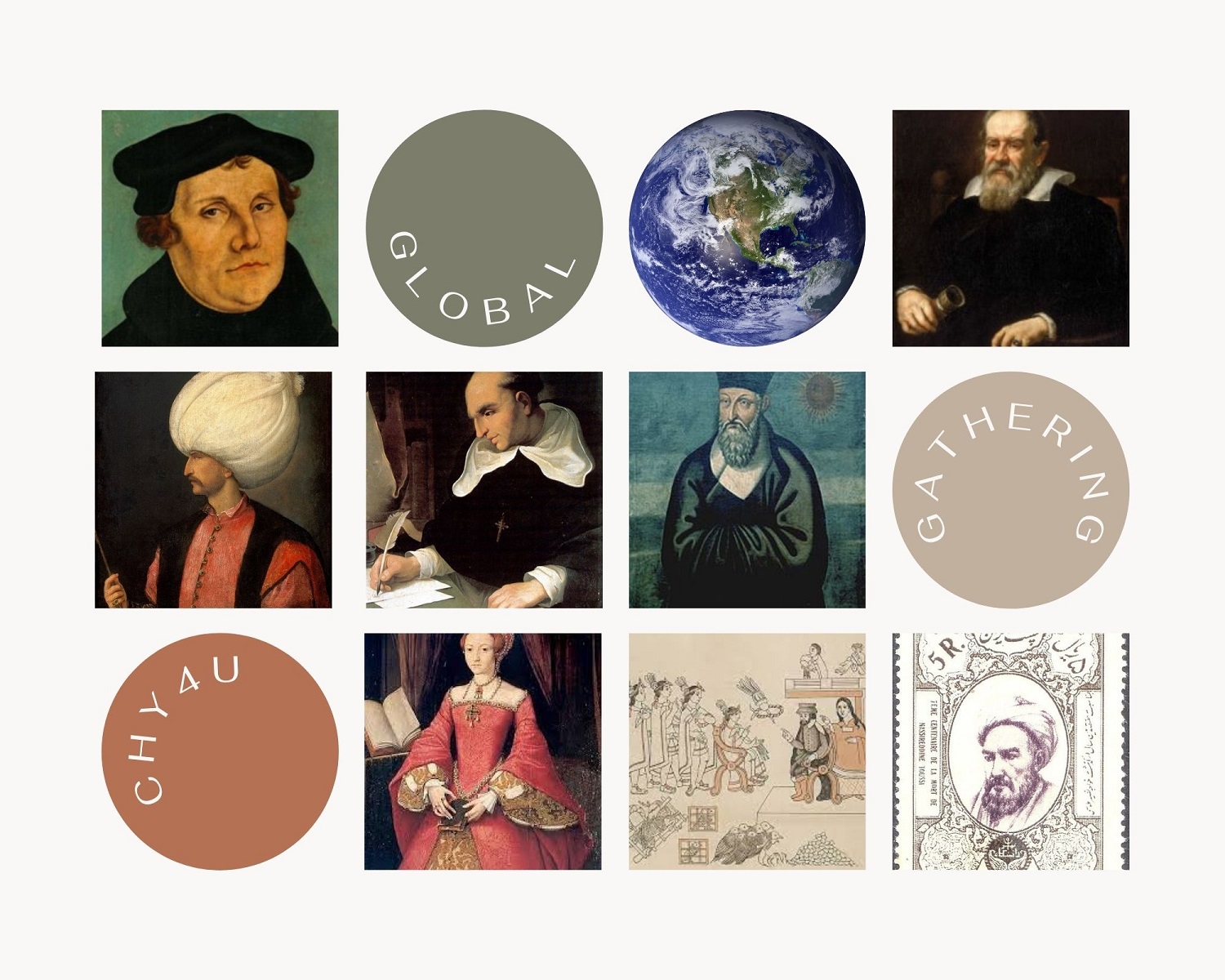
Welcome to World History.
I made a lot of changes to the course in my LAST year. They are mostly uploaded here (Sept. 5, 2026) but they are not fully complete.
This course focuses on a big thematic question: “how did we get here?” The course is partially examined through a decolonization lens. It is also heavily examined through the lens of primary source documents.
My course is based on the one that was created for the Ministry of Education in 2016 (I think). I was part of the team that created the E-Learning course. Much credit to lead writer Jim Pedrech, an amazing teacher. I credit him on all the handouts based on the course material. If I have updated them or used materials made by my student teachers, I acknowledge that.

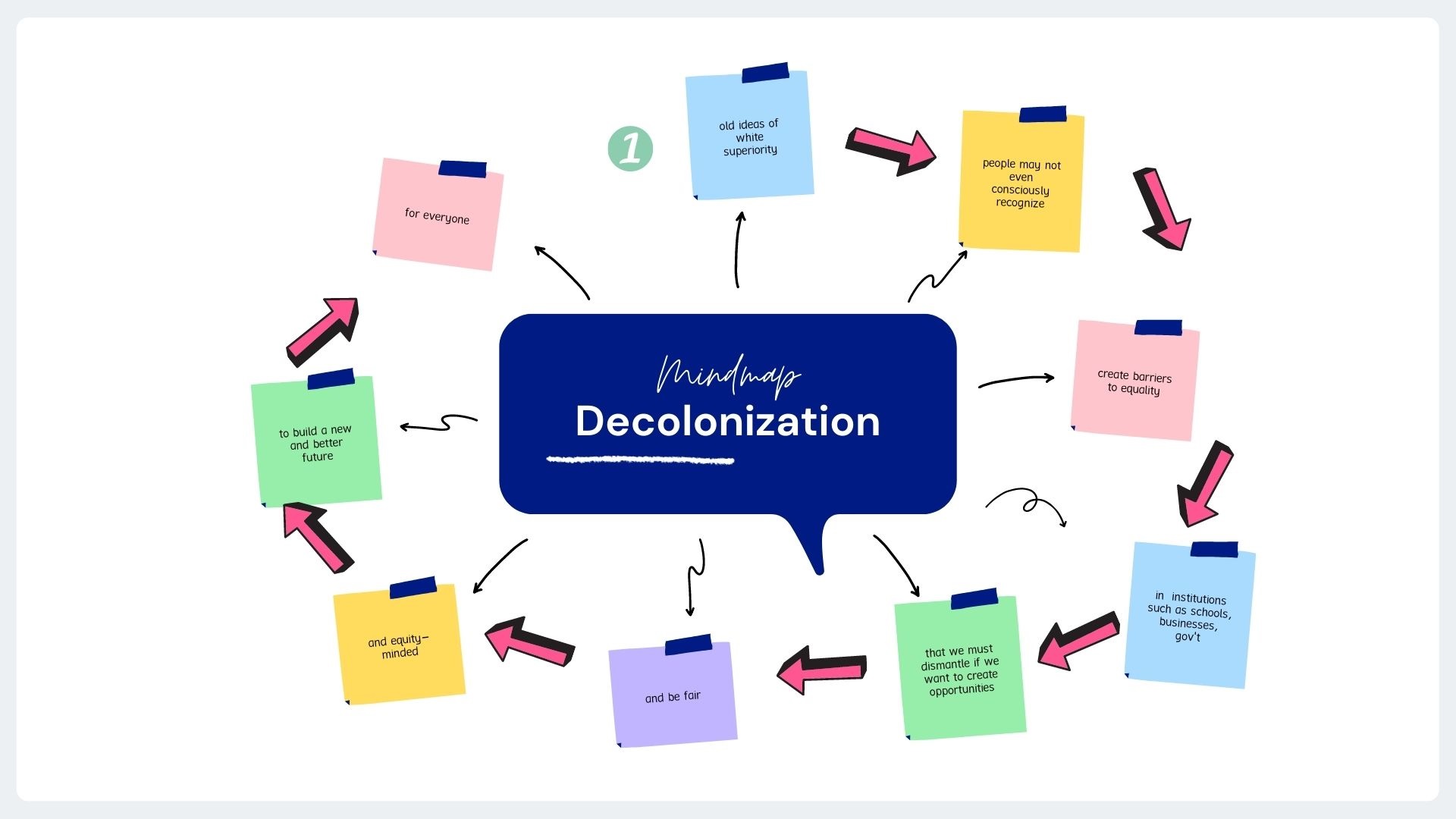
In this unit, we’ll attempt to figure out, “what were they thinking?” They, meaning the people in the 1450 to 1650 time period.

CHY4U Unit 1 Handout Package, 2024-25
Note to teachers: To set the INQUIRY tone for the course, I showed these slides.
1. Intro to historical thinking concepts, inquiry, and primary evidence.

Canada’s History
Note to teachers: I have started the course is many different ways over the years. Here’s one of the latest. I’ve never been into icebreaker activities. I prefer to use historical activities as icebreakers.
Minds On: What’s the most important word (one word) in the study of history?
My answer: evidence. Other possible answers that get at what I’m looking for: context, critical thinking, bias, perspectives, etc.
How did we get here? First we need to think about where “here” is, meaning what is the state of the world today, with a particular focus on decolonization, a crucial theme in the course.
Current Issues Related to Decolonization slides Here are the slides for February 2026. NEW
Additional Resource:
Watch this TVO video on decoding Canadian art. The subject is an Emily Carr painting in the Art Gallery of Ontario and how it is now presented.
Task: Students are to use the HTC handouts to help them figure out which HTC matches best with which image in the decolonization slides. First 6 pages in unit 1 handouts. CHY4U_Unit1_Intro_Activity There is not usually an incorrect answer, though I personally am not a big fan of Historical Significance.
HTC guideposts: see this page
Here’s a great Intro Activity I did twice, It’s from Digital Inquiry Group. I haven’t done it since the year before Covid.
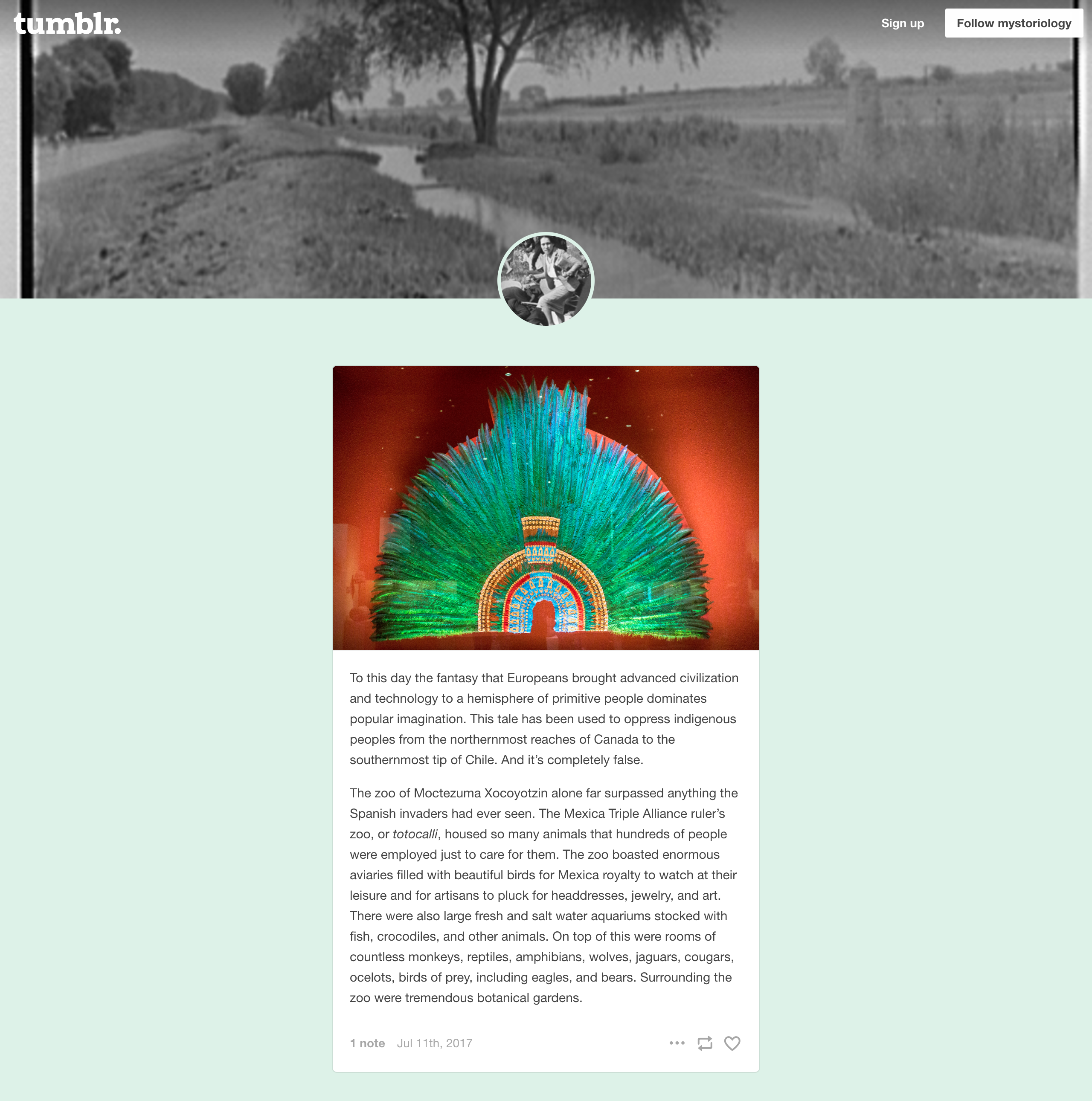
Note to teachers: An investigation (inquiry) into whether or not Moctezuma, the Aztec Emperor, had a zoo in Tenochtitlan, is a great first activity because it not only sets the stage for the content and time period of the course, but also is very open-ended and embeds many crucial skills.
Moctezuma’s Zoo Activity: (not done since 2020 but this is a great activity from Digital Inquiry Group, formerly SHEG)
Moctezuma Zoo Student Materials
Conclusion on importance of evidence: we need to approach evidence carefully and cautiously. Who wrote it? From which perspective? How reliable is it? What are the biases in it (everything is biased)? How does one piece of evidence corroborate (confirm) another?
Most groups felt their zoo evidence was a 6-8 out of 10 in terms of reliability. There were some concerns about bias or embellishment, ulterior motives (for example, of Cortes in writing to the Holy Roman Emperor), uncertainty of origin (the map that was published in Germany but of unknown origin).
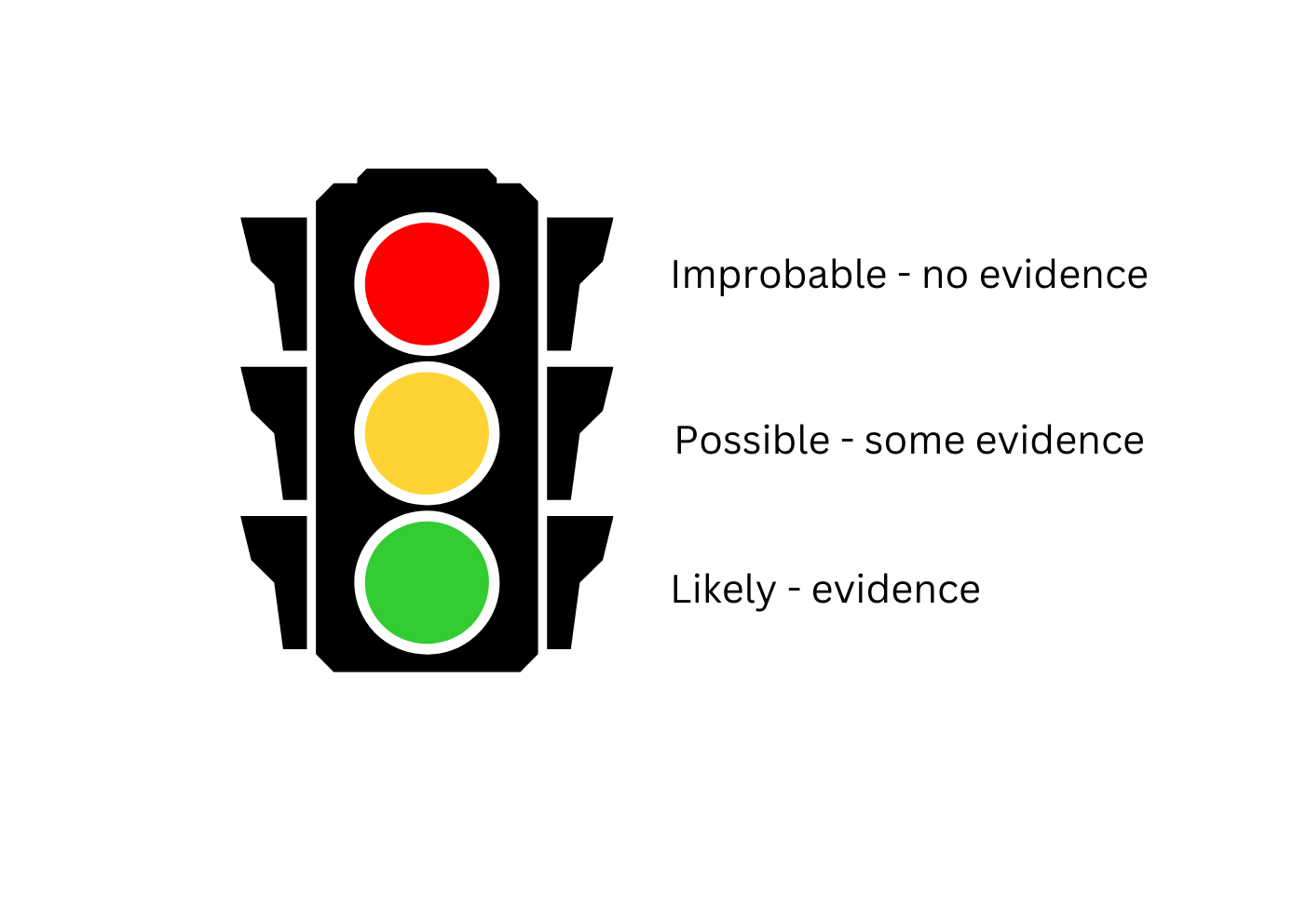
We make decisions about certainty. Red light – uncertain. Yellow light – be cautious. Green light – go ahead. Most things in history are yellow! That’s okay but it must be consciously acknowledged.
2. Seven Cities in 1450
1450 – What was it like?
Beijing, Kyoto, Seville, Tenochtitlan, Constantinople, Venice, Timbuktu (the original E learning course had nine cities. I chose to do only seven).
Note to teachers: I use this activity as an introduction to the importance of using criteria (to determine greatness) when making judgements and decisions. I also introduce the skill of annotation (rather than note-taking). Students have to rank the cities based on criteria they must develop. I encourage them to use political, economic, social and religious categories.
7_Great_Cities_2018-19 (PPT with instructions and questions) – this has been updated with a bit more information on the Spanish Inquisition. I’ll add it in when I find it.
Context_for_Spanish_Treatment_of_Aztecs (some background for Tenochtitlan)
Seven_Cities_1450 (handout pages on 7 cities so students can see the images in colour)

Skill: Using criteria (one of the most important foundations of critical thinking). Criteria are standards – the standards by which you make decisions. For example, when you choose what to wear to school you may base your decision on criteria such as the weather, comfort level, style, etc.
Category ≠ criteria
Example: category = economic, criteria = prosperous trade
You can only rank by criteria, not by category. Students find it very difficult to come up with criteria. PERSIAT is a helpful way to categorize. It’s an acronym for areas of any society, including political, economic, religious, social, intellectual, artistic, technological. I would love to add E for environmental but never had the time.
Skill: Annotating.
For annotation, mark up your pages using symbols, key words, definitions, colours, connections to HTCs (and guideposts), PERSIAT, decolonization connections. Annotating should replace note-taking for in-class activities centered around the handouts. It’s very helpful for upcoming quizzes and tests: you don’t have to read over the whole page again during the evaluation – you have already decided what is most important and worth noting.
Sample criteria:
economic – open to trade, prosperous, prolific trade
political – efficient government that rules for the benefit of the people, stable government (probably best not to choose authoritarian government because most were at the time)
Debrief: students share their rankings after three in-class periods. There will be a follow-up quiz. All evaluations are OPEN BOOK.
On the quiz, students have to compare their top city and their worst city (or second best and second last, or something similar). Here’s a mock-up I created to show the students how to make the comparison. It uses fictional modern cities rather than cities from this activity.
3. Religion in Europe: The Protestant Reformation and Its Effects
Five Significant World History Events Pulled from Seven Cities Activity
- The Renaissance
- Background on the Renaissance: The Middle Ages in Europe was a very sacred time (meaning almost everything related to religion – in this case Roman Catholicism). Some time toward the end of the late Middle Ages, especially in the wealthy Italian city states (such as Florence), educated and wealthy people began to be interested in more secular (not related to religion) matters such as philosophy, art, education, and classics (things from ancient Greece and Rome). This was called the Renaissance because it was considered (by later historians) to be the rebirth of interest in the classical world. During the Middle Ages, many regarded classical times as negative because they weren’t Christian – in fact, they called them pagan, a negative term applied to anyone non-Christian or who believed in more than one God. As we learn about the Protestant Reformation, it’s important to know that the criticism of the Catholic Church partially grew from this new way of thinking, often called Humanism.
- Textbook pages 15-23 will help students become familiar with the Renaissance if you wish. Note: we do not use textbooks anymore but there is a pile of them in the back of the class.
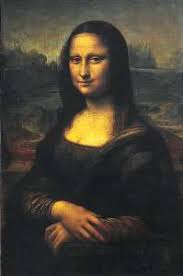
2. The Spanish Inquisition shows the dominance of the Roman Catholic Church in Spain and how it become virulently intolerant of Jews and Muslims.
3. In China, the Mongols were overthrown by the Ming dynasty. China was the most prosperous and advanced place in the world.
4. The Byzantine Empire (the eastern portion of the Roman Empire, which was eastern Orthodox in religion and spoke Greek) was overthrown by the Ottomans, a rising Muslim power now centered in modern-day Turkey.
5. Spanish exploration of the New World (north, central and south America) began just as the reconquista (the Catholic unification of Spain) succeeded . We will see see how severely impacted the New World will be.
Martin Luther’s 95 Theses
CHY4U_Luther_PSD (PDF)
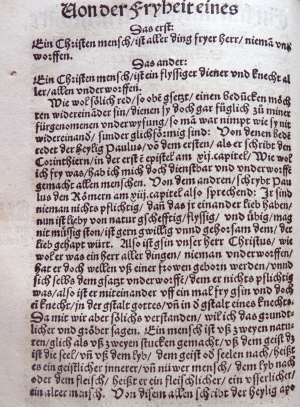
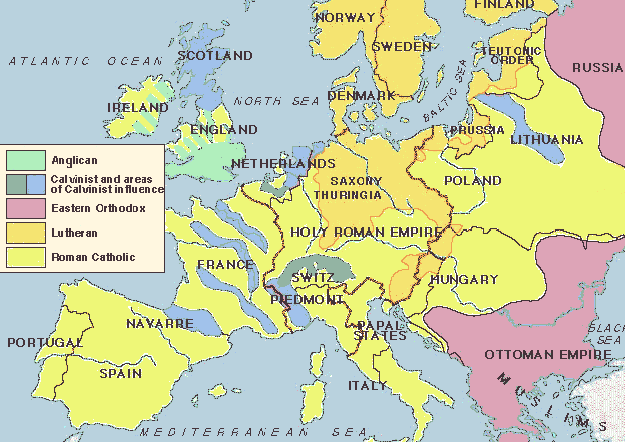
Note to teachers: It is very “western” to start with the Martin Luther primary source document. However, it serves a lot of needs as it was the impetus for the Roman Catholic Church to create the Counter-Reformation which sparked the Catholic missionaries to go far away to look for new souls to convert. Nothing could be more important to unit 1 than that.
Minds On: imagine all of western Europe was yellow (Roman Catholic) in the year 1450. What could have happened to have changed it so much?
Skill: learning to annotate a PSD – write little notes to yourself ON your document – your PSD should not be naked. Be an active learner, not a passive body just sitting there in class.
HTCs: primary evidence, historical perspectives (and how they always go together).
Skill: Contextualization – what was going on before and at the time of the writing of Luther’s 95 Theses and how did it affect the document and its perspective?

Luther Slides 2026 I use this activity to introduce students to the HTC of historical perspectives. This is a limited introduction because there is no corroboration using other documents in this activity. However, Luther’s 95 Theses document is relatively easy to understand as students’ first PSD of the course if they are given a few key vocabulary words and context for it (in slides).
Student activity instructions are on slide 9.
- if students want to do background reading in the textbook on Luther and Protestantism, see pages 29-41.
- Don’t forget that we connected the battle for souls in Europe (Catholic vs. Protestant) to the exploration of North, Central and South America and Asia and the missionaries that followed.
- indulgence = “An indulgence is one way for the faithful to reduce the punishment they have to undergo for their forgiven sins.” (source)
Follow-Up Activities
Note to teachers: I created follow-ups during Covid to get students to share their thinking process that they did at home. In the last few years I had students do these in class for marks (they comprised part of T, A, and C marks) but were just recorded separately only for about 2 or 3%.) They were a really good way to encourage daily attendance.
What do you think this quote means? Who said it? In what context, perhaps?
“Since then your serene majesties and your lordships seek a simple answer, I will give it in this manner, plain and unvarnished: Unless I am convinced by the testimony of the scriptures or clear reason, for I do not trust in the Pope or in the councils alone, since it is well known that they often err and contradict themselves, I am bound to the Scriptures I have quoted and my conscience is captive to the Word of God. I cannot and will not retract anything.” (quoted in this source)
Make a heading for this list of bullet points
- translated the New Testament into German (from Greek) – which became known as the Luther Bible and sold nearly 500 000 by 1550. Then the Old Testament (from Hebrew)
- his Bibles were illustrated
- he wrote a lot of books (120 volumes)
- he reduced the number of sacraments (rituals that were to take place during a person’s lifetime, such as baptism, marriage, etc.)
- he was not in favour of priests having to be celibate and remain unmarried
Effects of the Protestant Reformation:
Counter-Reformation – the Catholic Church wanted to get more converts so the Jesuits (Society of Jesus) was created. They were missionaries sent abroad to convert non-Christians to Catholicism. Jesuits became known for being well-educated – many of them being Humanists. Also the Catholic Church created the Index of Prohibited Books.
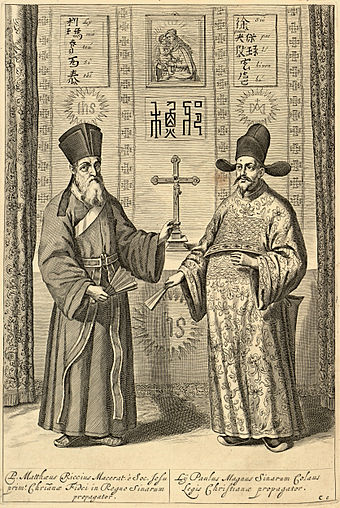
CHY4U_Textbook_Reading_Protestant_Reformation (if you wish to get more context)
Malleus Maleficarum (The Hammer of Witches) – NO LONGER TAUGHT DUE TO TIME ISSUES but this was a fantastic activity for introducing some key Christian concepts that relate to women. There’s more to witchcraft than the Salem witch trials.
PSD: Malleus Maleficarum
Skill – contextualization of a PSD (what was going on at the time that may have influenced the writing of the PSD)
Terminology Notes:
- the book uses the term sorcerer/sorceress to mean witch.
- Malefica = evil doer (witch).
The kind of witchcraft described in this book is different.
***A NEW belief in the 1400s that sorcerers work for Satan to inflict sorcery on society – main foci below:
- A pact with the devil
- Sexual relations with the devil
- Aerial flight to get to a Satanic gathering where there was incest and promiscuity
- Magic for malevolent reasons
- Baby killing
The inquisitors (Kramer and Sprenger) who wrote this book were trying to persuade other Catholics that this kind of witchcraft existed. The older belief was that witches just used magic, but not for Satanic purposes. Magic was a common thing in the Middle Ages in Europe; some priests even used magic. So they were promoting a new view and they wanted to get sanction for it to be used by inquisitors.
CHY4U_Malleus_Activity (Miss See’s PPT – she was a teacher candidate of mine)
Malleus_Mal_Notes (context for The Hammer of Witches PSD – more on the bullet points above)
Activity:
Women in Medieval Society (British Library) – find something specific on this webpage that gives context for something specific in Malleus (original sin). Dec. 2025 note: this link is no longer working. It’s still worth checking out the British Library website for similar materials.

“Witch hunting”
4. Japan and Portugal – Conflict and Cooperation
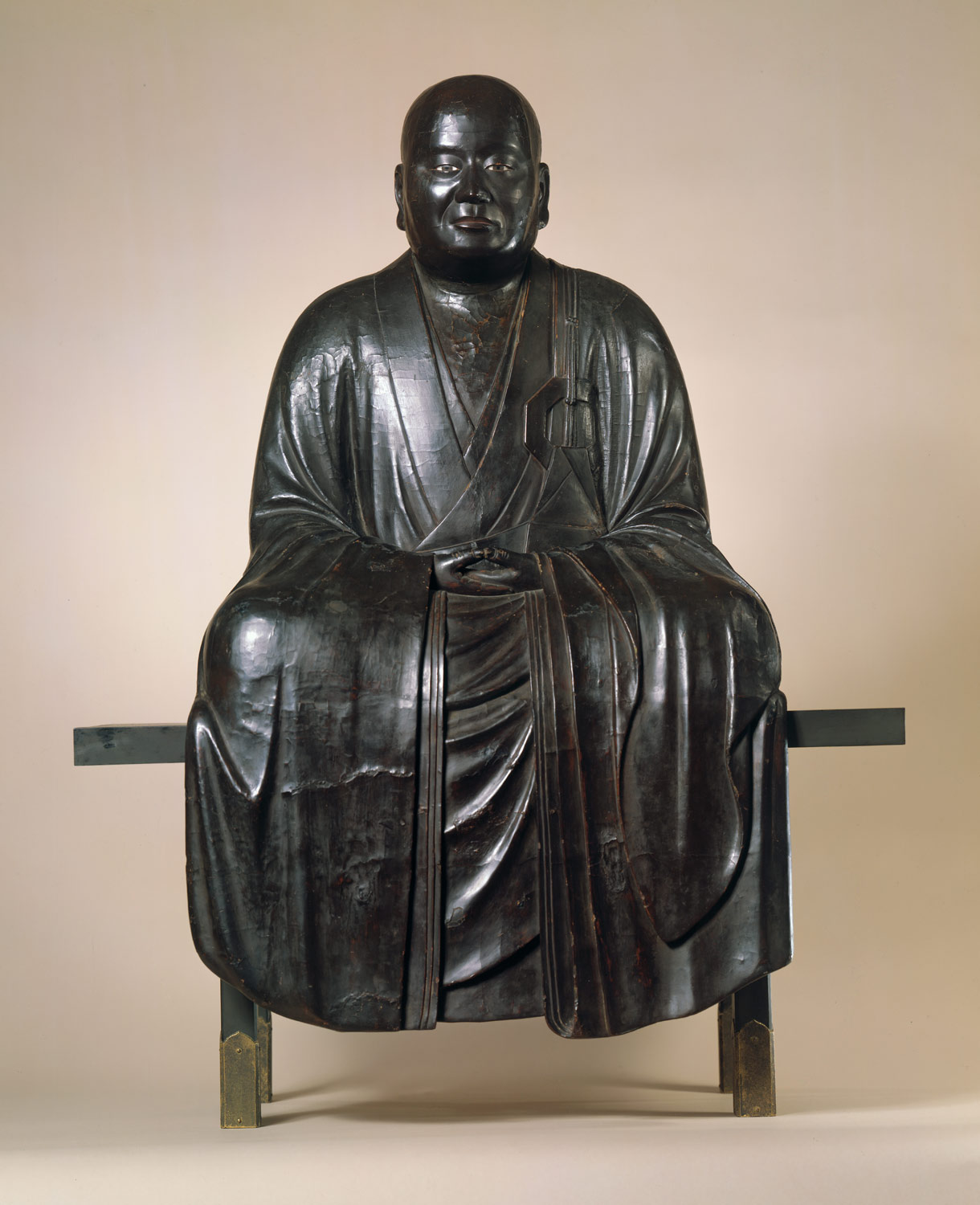
Note to teachers: In this activity students are going to learn more about Japan, which was first introduced in the Seven Cities activity. The focus of the next three case studies will be three different parts of the world and their experiences with the Catholic Church, Conquistadors, and more. There are many ways this case study could be framed. For me it’s about the main theme of conflict and/or cooperation (direct from the curriculum document), but it’s also about complexity of thought as students will try to find out the true motivation for the change in how Japan dealt with foreigners.
PSD:
- Edicts of Toyotomi Hideyoshi: Excerpts from Expulsion of Missionaries, 1587
Japan’s Interactions with Foreign Religions slides: (one of my most requested slide presentations)
Japan+Christianity_Backgrounder (read this to get some context)
Activity:
After viewing the PPT, sort the various events into causes or consequences. CHY4U_Japan_Causes_Consequences (answers are on here)
Note to teachers: I created this quick activity because I wanted some HTCs to be examined and I wanted students to have a bit more context for them to see how complex the situation was.
key words:
social hierarchy, shogun, daimyo, Confucianism, Buddhism, Protestant Reformation, Catholic Counter Reformation, animist (belief that spirits occupy nature and other things), polytheistic (religion with multiple gods), Jesuit missionaries (Society of Jesus), feudalism, lord, vassal (someone who is the subject of someone else – e.g., the shogun distributed fiefs [grants of land] to the daimyo who became his vassals. In turn, the daimyo’s vassals were the peasants)
Questions for Cause-Consequence Sorting Activity
- What does today’s topic reveal about the Japanese rulers’ (shoguns’) attitudes toward religious differences?
- How is the Japanese attitude similar and/or different to the European examples (Catholic vs. Luther)?
- Use the inquiry question grid to construct some interesting questions about today’s topic.
- Make a hypothesis about the main motivation for the increase in severity of the Japanese Edicts pertaining to Christians and foreigners.

Dutch East India Company (AKA the VOC) – what is its political significance (internationally)?

‘The “trade pass” (Dutch: handelspas) issued in the name of Tokugawa Ieyasu. The text commands: “Dutch ships are allowed to travel to Japan, and they can disembark on any coast, without any reserve. From now on this regulation must be observed, and the Dutch left free to sail where they want throughout Japan. No offenses to them will be allowed, such as on previous occasions” – dated August 24, 1609 (Keichō 14, 25th day of the 6th month); n.b., the goshuin (御朱印) identifies this as an official document bearing the shogun’s scarlet seal.’ (Wikipedia, VOC Opperhoofden in Japan, July 2, 2017, https://en.wikipedia.org/wiki/VOC_Opperhoofden_in_Japan)
Note to teachers: we don’t spend too much time on this in unit 1. Later in the course, East India companies will become even more important in world history. So it’s good for students to have this reference back to unit 1. Spiral as needed!
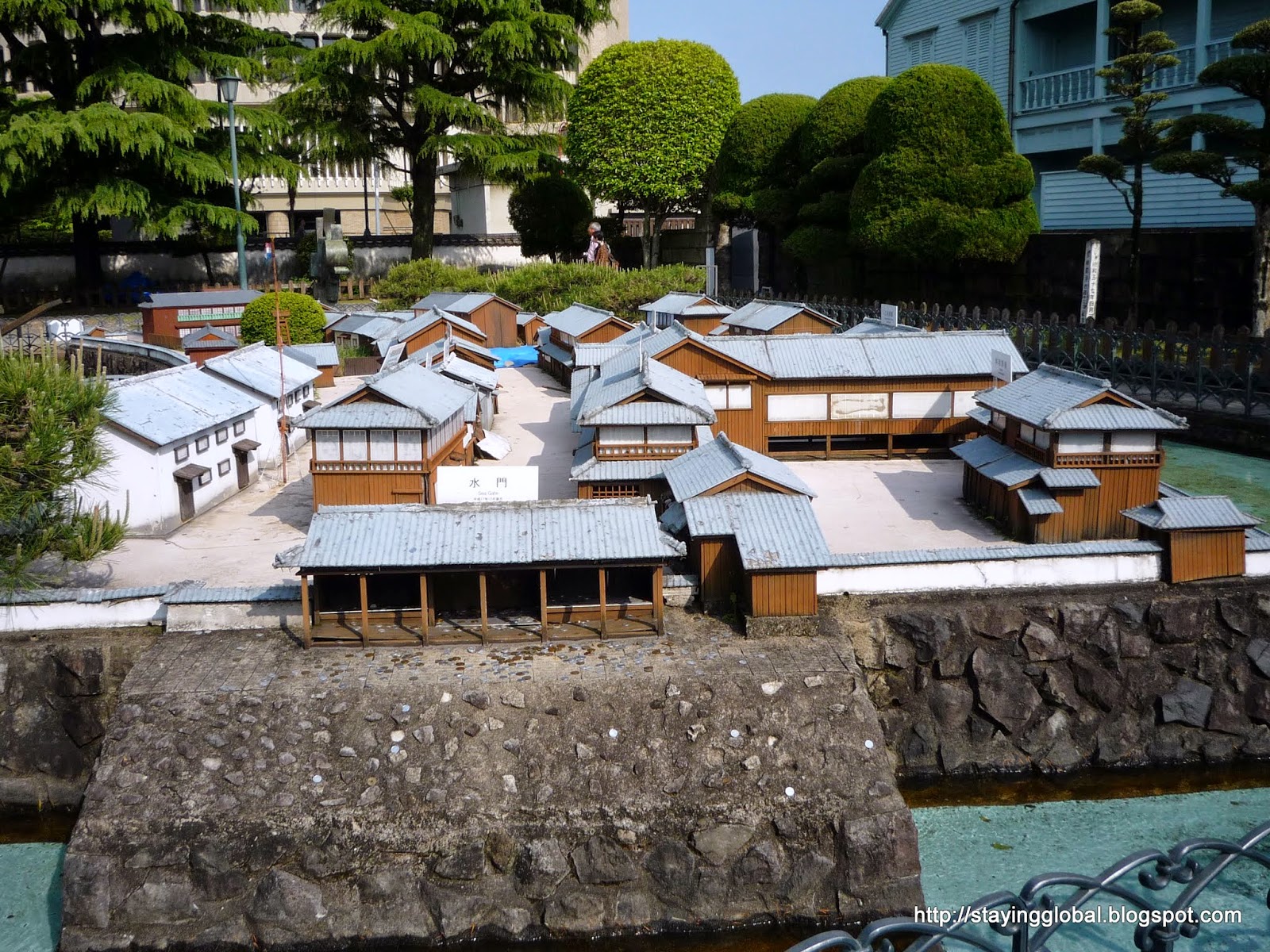
Dejima – what does it tell you about isolation in Japan? But also about regional trade opportunities for the Dutch?
Saltpeter – what is it? Why is it significant to the Portugal-Japan relationship?
PSD – 1635 Closed Country Edict: (don’t forget this is in addition to 1587 edict).
- Japanese ships are strictly forbidden to leave for foreign countries.
- No Japanese is permitted to go abroad. If there is anyone who attempts to do so secretly, he must be executed….
- If any Japanese returns from overseas after residing there, he must be put to death.
- All incoming ships must be carefully searched for the followers of padres.
PSD – 1639 edict – give evidence of “suspicious” behaviour by the Portuguese (according to Japan).
Chronological Events:
1543 Portuguese arrive in Japan
1587 Edict bans Christian missionaries but allows trade
1596 San Felipe incident
1609 Trade pass (allows Dutch to trade with no restrictions) – note Dutch are Protestants
1635 Closed Country Edict
1636 Dejima is built to house Dutch traders
1637 Shimabara Massacre
1639 Edict bans foreigners altogether (except Dutch)
Activity: Timeline with Attitude
Note to teachers: I introduce the timeline with attitude in unit one as a practice. I had it as an evaluation in unit 2. Had I kept teaching I probably would have changed this. It’s a very good exercise to introduce students how to take historical perspectives. Each group selects events that are relevant to its perspective. They place each event on the timeline at an appropriate location for which they’ve given criteria (rather than simply saying excellent, good, medium, bad, horrible, etc.). The fascinating part is how the placement of the event can change based on the event, perspective and the criteria. It’s best to have students do these on white boards so that other groups can see their work.
Instructions:
1. Use your choice three of the events from the timeline above. They must be relevant to the perspective given to your group.
2. Place them on the y axis of the timeline (progress [+1, +2, +3] or decline [-1, -2, -3] according to where they’d be from the perspective given to your group listed below. The hardest part will be coming up with criteria for each “score”:
a) Shogun
b) Roman Catholic Missionaries
c) Converted Japanese Christians
d) Dutch traders
3. Draw arrows to show continuities (solid line) and arrows to show changes (broken line) if desired.
Note vocab of continuity/change: extreme, moderate, evolution, revolution, shift, same, different, add, continue, over time, quickly, slowly
4. In class:
a) The two groups that did each of the perspectives should share and see if their timelines are similar.
b) Each large group sends one or two people to the front to share with the rest of the class.
c) Debrief: what is the trend in terms of proving a hypothesis? How is the activity supporting or disproving the hypothesis you made earlier about the main motivation for the increasing severity of the Japanese Edicts?
These websites on Japan are only for interest
Religion in Tokugawa Japan (Japan Society) * very useful context
Samurai Sisters (Women in World History)
Gender Differences in History: Women in China and Japan (Women in World History)
Japan, 1600-1800 (MetMuseum)
Tokugawa Shogunate Overview (Asia for Educators)
5. Aztecs and the Spanish – Conflict and Cooperation and Views of the Gods

- Skills: contextualization, historical perspectives
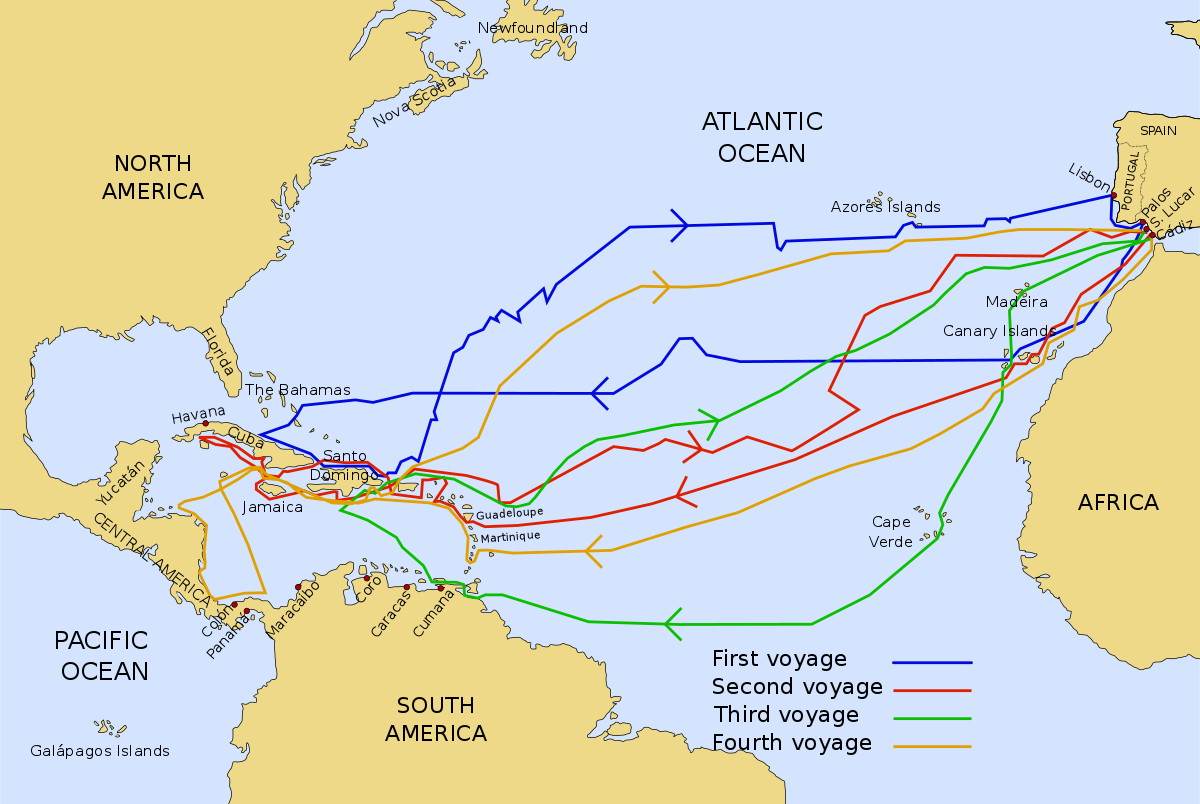
- we will practice with Columbus’s PSD (ship’s recorder) handout. CHY4U_Columbus_PSD (note the term “Eurocentric”)
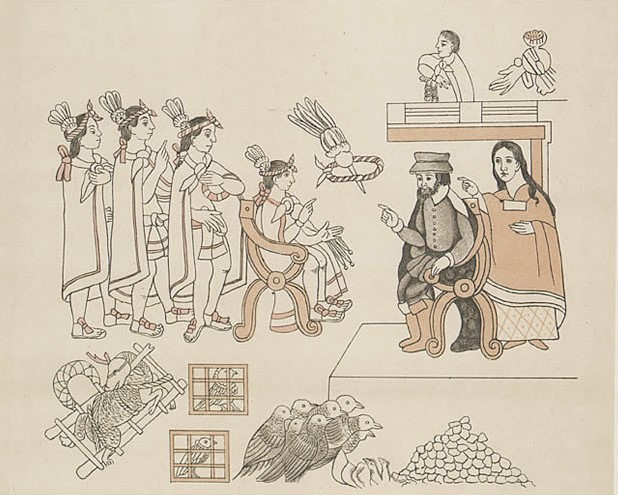
Note to teachers: In this second case study, we will examine the complex relationship between the Aztecs (Aztecs/Mexica) and the Spanish. This enables the class to examine continuities and changes between Japan and Mexico in terms of their experience with Europeans. There has to be some context first, going all the way back to Columbus to establish Eurocentrism, slavery, etc.
Key Background Knowledge
- encomienda was a system in the New World in which the Spanish crown granted the labour of the Natives to the Spanish. The people were used to work the land. The person who controlled the encomienda was called the encomendero. Las Casas was once an encomendero. As you will see, the system was exploitative and cruel. It bore a lot of resemblance to medieval European feudalism with more cruelty. It was essentially slavery.
I used a portion of this DIG activity, the Matthew Restall – historian – portion, to introduce historiography in a a way: historians have changed their approach to studying the meeting of Cortes and Moctezuma.
What did the Aztecs make of the Spanish? (Mexicolore on YouTube) – watch in class or at your table and identify the different ways that Spanish and Aztecs looked at gods. (historical perspectives). I still really like this video!!!
- For Malintzin, listen to the audio and answer the questions on the handout.
Websites for your interest:
Despite Similarities, Pocahantas Gets Love, La Malinche Gets Hate. Why? (NPR)
Conquistadors: Cortes (PBS)
Conquest of Mexico Paintings (Library of Congress)
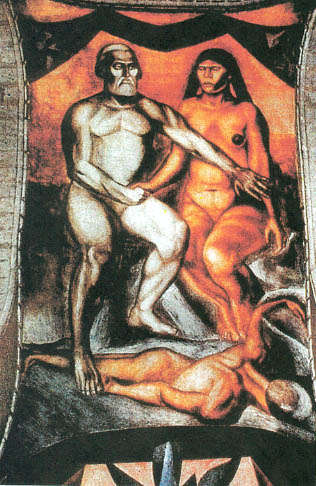
La Malinche (Malintzin)
Translator for Cortes in the Aztec Empire (Diaz del Castillo PSD) – read the blurb and the PSD. Identify how he complements her. Note how complex her background was.
Sources:
Who Was La Malinche? (NY Public Radio) – 6: 50 – please listen
Hero or Traitor? (NPR article – you can read this if you want a better understanding of how La Malinche has been seen over time)
Identify various ways she was portrayed over time (4-6 ways). This tells us a lot about today, actually.
Las Casas

Read the Las Casas PSD. This is an excerpt from his book, The Destruction (Devastation) of the Indies.
Activity: decide where you’d place Las Casas on the following spectrum and be prepared to justify your placement with evidence:
10 ——————————————————————–1
truly on the side a true advocate
of the Spanish for the Indigenous people
(conquest and conversion)
Websites of Interest:
Las Casas and 500 Years of Racial Injustice (Origins: Current Events in Historical Perspective)
Las Casas debates the Subjugation of the Indians, 1550 (Gilder Lehrman Institute of American History)
Las Casas (Columbia College, Core Curriculum)
6. Kongo and Portugal: Conflict and Cooperation
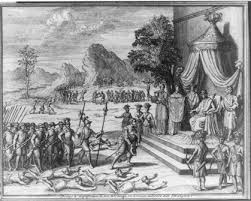
Note to teachers: In this third case study, we will move to Africa to examine Kongo and the early origins of the Trans-Atlantic slave trade. I have significantly changed this topic over the years as I’ve learned more about Kongo and have made a concrete effort not to portray the Kongolese as victims. Rather, they had some agency.
- Read the letter by King Afonso of Kongo to the king of Portugal. Note his tone: is it dominant, subservient, other? Does this king write to the Portuguese king as an equal?
- Read the summaries of political/economic/social/religious aspects from the British Museum activity). Label each as one of those letters (or use four different colours).
- Conclude: what were the dominant motives for Afonso’s actions?
Kongo and Portugal Conflict and Cooperation slides (2026) – I (and my previous student teacher Daria Karam) added more background on Kongo prior to its relationship with Portugal, and I changed the HTC activity so that it wasn’t about blame or responsibility. It focuses on external and internal events and actions. The TASK for students is on slides 14 and 15.
I also use a British Museum activity to get much further into detail about the topic. This is a fantastic resource that allows students to see the complexity of this topic.
Websites of Interest for Kongo:
African Christianity in Kongo (Metropolitan Museum)
Kongo activity (British Museum)
7. Historiography: Galileo (not done 2025 due to time issues – I incorporated historiography in other ways and created a new handout using some information about Galileo and how different historians have approached him more recently)
Skill: historiography (theories of history, how history is written, approaches to history) Different types of historians approach things (information, data, events) in different ways.
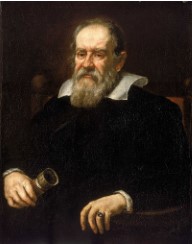
a) Galileo Galilei (Abjuration PSD)
Sci_Rev_PPT_Slides_2019 (PPT) for background
Galileo_Context (this is one of my favourite documents I’ve ever created!)
website you could check out: http://newsroom.ucla.edu/releases/the-truth-about-galileo-and-his-conflict-with-the-catholic-church
8. Unit Culminating Activity: Global Gathering
Note to teachers: this is a favourite activity that I created (it’s not in the E learning course). I’ve changed it a bit over the years to make it less western, more global, and to incorporate Canadian content and a few more women as well.
My 2025-26 class did an amazing job on the interactive, participatory aspect of this assignment in which each student researches a person and decides how global the world really was in the unit 1 time period. All work was done in class.
– see side page