Yesterday, I saw chickadees and goldfinches scrounging for food. It had been a while since I saw them as they know we don’t put out bird food in the summer.
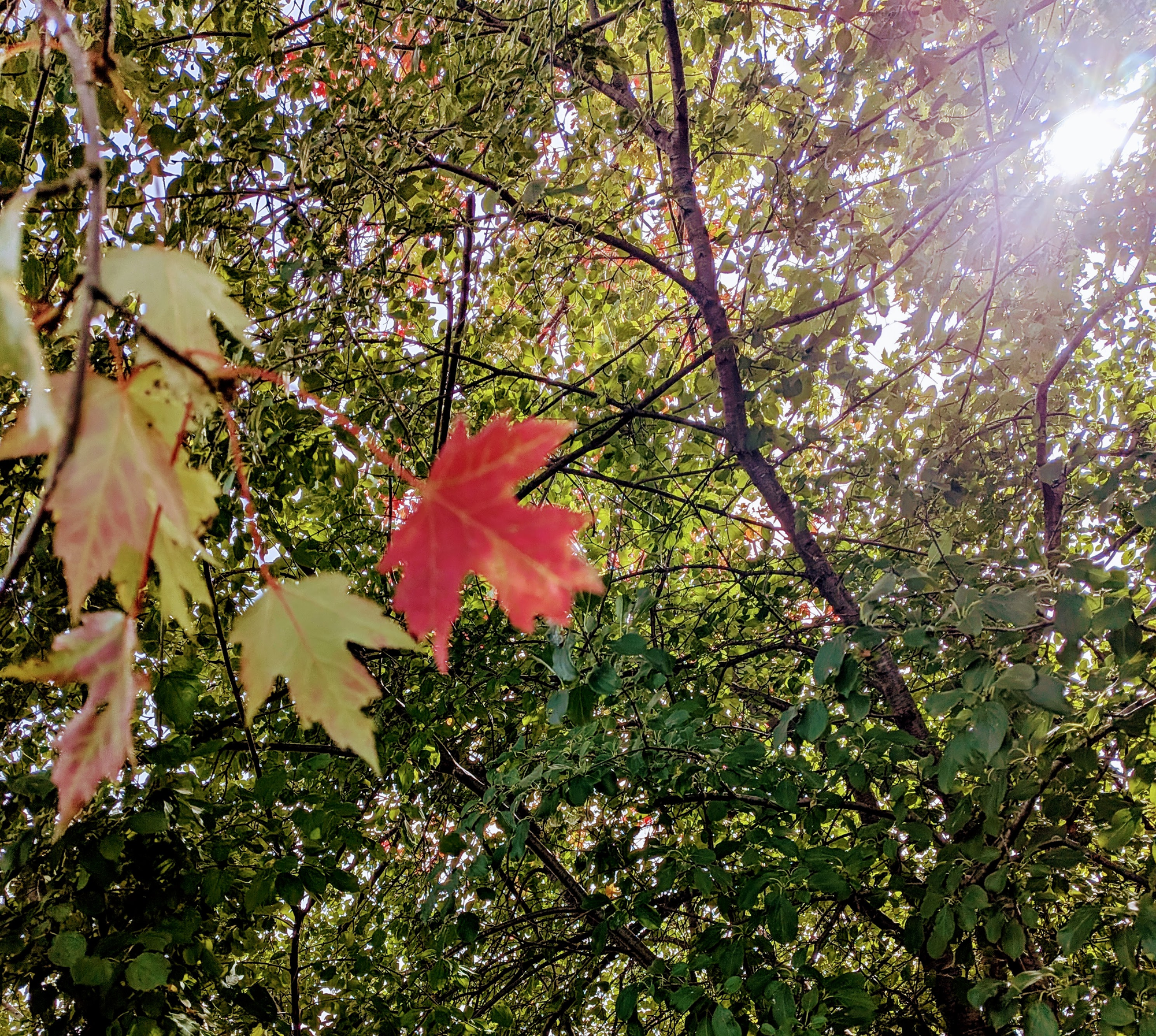
There’s a red leaf here and there. Go Canada!
Fall just happened. Quickly. Adjusting to a new pace of life, I got caught off guard.
I guess I’m feeling nostalgic about this time of year when I didn’t used to need any outside prompting to know what to do; third week of school was the time to get some marks, get to know the kids more, start organizing for the next unit, etc. Now, I admit I’m a bit directionless.
So I did something totally out of character for me – because I hate straight-up timelines – I checked what happened in history on September 22. As silly as that sounds, it brought to mind some fun and skill-building class activities I might do with the website On This Day. I suppose I just cannot get teaching out of my head.
Students could work in groups to identify patterns and trends in the timeline of the day (any day). Are the patterns accidental or is there something significant about the time of year common in multiple countries across different time periods of history?
For younger students, it might be best for students to find some personal connections to events to demonstrate what a pattern might look like. For instance, for me, a person relatively familiar with general world history, there are a lot of premiers of television shows I did not enjoy or watch at all (Full House, Family Ties, Baywatch), while the West Wing is one of my all-time favourites, with the incredible Allison Janney winning multiple awards. The pattern shows this is the time of year in the US for both show premiers and for the Emmy awards. I also noticed a few events and people I’ve read books about, such as The Salem Witch Trials, Charles Darwin, Abraham Lincoln, and the Abu Simbel Temples.
According to whom are these the most important events on this day? Given that many of the events in the timeline for September 22 seemed western-oriented, I was a bit surprised to learn that most of the editors of “On This Day” are from Australia or New Zealand. Introducing perspective here.
My favourite: what criteria do the editors use to select events?
How is context provided on the website itself to help students understand the editors’ choices? There are clues to be found.
For corroboration (or not), what do other websites of this nature say about events of this day? I suppose students could also compare to AI. I say that begrudgingly.
I personally wouldn’t do this activity with grade 11 or 12 world history students, but maybe with grade 10s or younger as a ‘get to know you’ activity. I’m more of a “timeline with attitude” kind of person. Perhaps I’m subconsciously thinking about the last unit four activity of grade 12 history to update on this website.
Happy official fall.