Teaching World History … and personal stuff

For Teachers of World HistoryCategory Archives

The Secular, Atheist Teacher of Religion

How was an atheist teacher of ancient history able to manage given that history has been dominated by religion?

Obviously, I could not ignore it – though I definitley ignored Greek mythology. I faced religion head on in both world history courses, but especially grade 11, the way I do in society today; even though I am an atheist and thus, by definition, a secularist, I detest evangelism, so I accept people as they are.

For the most part, especially in ancient history, I would say that religion was an organizing principle for the governing unit – whether country, empire, province, city-state, whatever. It would be anti-historical of me to not recognize that. Maybe I over-compensated and spent too much time on religion as an organizing tool. The point being that in a non-secular society, there is not much of a separation between religion and anything else.

Even though I’m an atheist, I still enjoy going to a museum and looking at Egyptian objects that had religious value: an amulet, a pharaoh’s throne, a statue. Many everyday Egyptian objects connected to religion. This site highlights 14 interesting objects from everyday life. The descriptions are fine, but I’d probably add more about the afterlife and how the tombs the objects were found in are related to the quest for the afterlife.
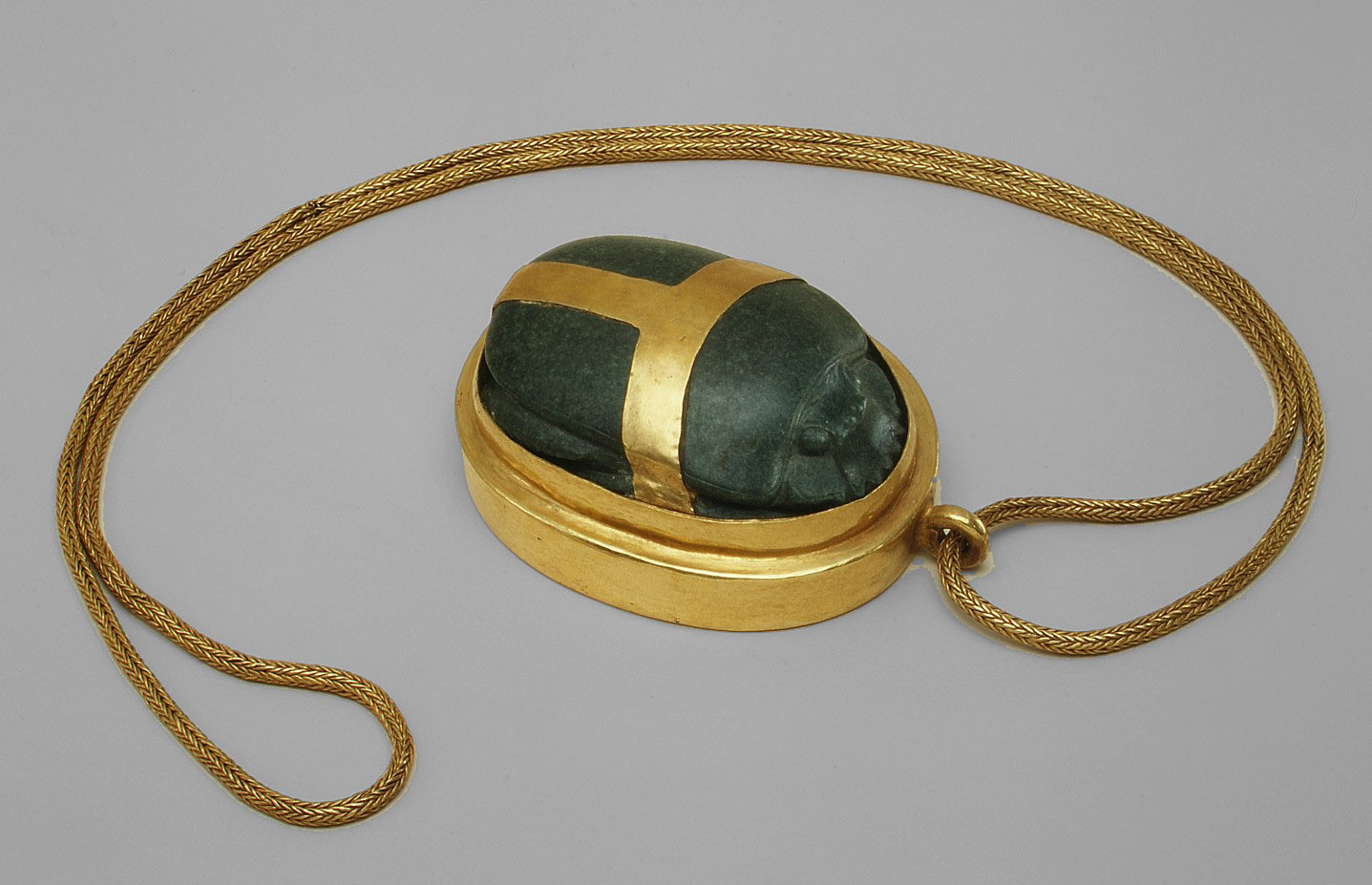
Heart scarab

How did I handle the practitioners or believers, AKA the people? I believe I tried not to dismiss them. I went out of my way to make sure my students understood that proper historical analysis does not judge the past by today’s values. Though we cannot walk in Egyptians’ shoes, so to speak, we can use context and evidence to produce a relatively accurate picture of the way they lived. And that included believing whole-heartedly in the gods and goddesses and everything they ‘touched’.
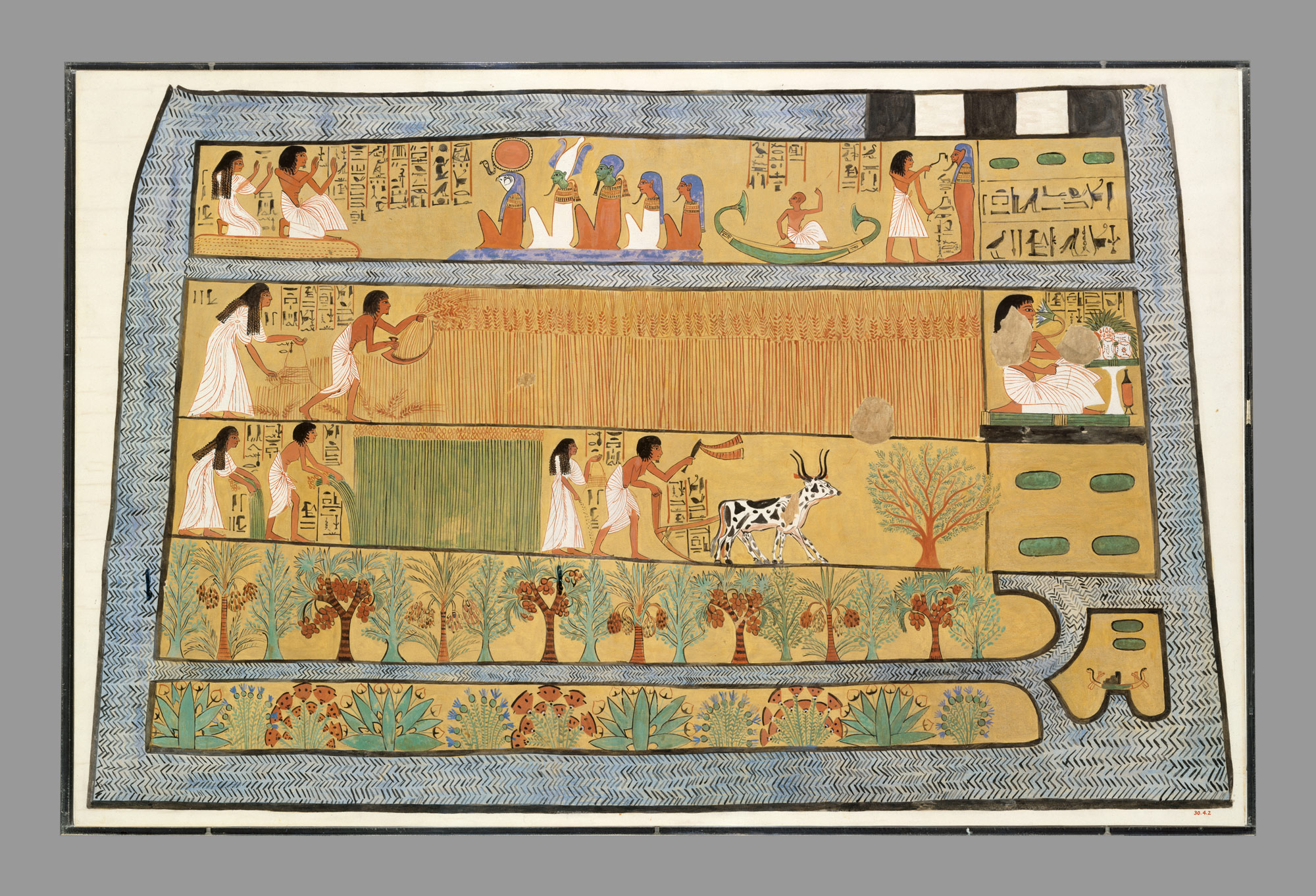
Harvesting in the afterlife

What about the Romans, who went from relatively tolerant polytheists to polytheists who condemned Judaism and Christianity, then to Christians who condemned polytheism? I never really studied Roman polytheistic religion in depth, as I have Egyptian state religion, probably because I struggle to memorize the many gods and goddesses and their relationships. But one thing I found interesting about the Roman religion pre-Christianity was its emphasis on process over belief (as we would call it today, I suppose). A prayer wasn’t a heart-felt message addressed to a particular god; it was a process that had to be done correctly in order for that god to favour the speaker of the prayer.

How about the Roman priests’ fascination with birds for identifying omens (not exactly predicting the future): wow, you just can’t make this stuff up. Read what Imperium Romanum has to say about auspices and augurs and their connection to Jupiter. I will never forget the lesson a U of T Roman history lecturer gave about “checking the chickens.” He also had a pretty good grasp of the connections between Rome and Star Trek, but that’s for another post.

Here’s a description of the chickens from, of all places, Diderot’s encyclopedia – not a collection that was generally in favour of religion.

Sacred chickens were chickens raised by priests in Roman times, and which were used for making auguries. Nothing significant was undertaken in the Senate or in the armies, without omens being drawn from the sacred chickens . The most common method of drawing these omens consisted in examining the manner in which the chickens dealt with grain that was presented to them. If they ate it avidly while stamping their feet and scattering it here and there, the augury was favorable; if they refused to eat and drink, the omen was bad and the undertaking for which it was consulted was abandoned. When there was a need to render this sort of divination favorable, the chickens were left in a cage for a certain amount of time without eating; after that the priests opened the cage and threw their feed to them

Jaucourt, Louis, chevalier de. “Sacred chickens.” The Encyclopedia of Diderot & d’Alembert Collaborative Translation Project. Translated by Dena Goodman. Ann Arbor: Michigan Publishing, University of Michigan Library, 2007. Sept. 23, 2026, <http://hdl.handle.net/2027/spo.did2222.0000.865>. Trans. of “Poulets Sacrés,” Encyclopédie ou Dictionnaire raisonné des sciences, des arts et des métiers, vol. 13. Paris, 1765. I found it at this University of Michigan site.

Certainly my view of religion must have clouded my tone when teaching about times when religion was used to justify horrible actions, such as the Crusades. But that’s somewhat okay because ethically it’s not acceptable to hide behind “but it was different back then” when teaching topics that involve mass deaths. I carefully crafted brief introductory / contextual lessons on the Middle Ages in Europe to introduce the centrality of the Roman Catholic Church, and beliefs about heresy. I also made sure to incorporate the history and culture of some Islamic societies and their progressive scientific investigations (which were tied to Islam) before students examined the Crusades. Interestingly, it’s one of the lessons I tweaked the most over the years because there was little time for it but lots to be done.

Overall, ancient history brought out tolerance of religion in this atheist. It’s never a bad thing to be tolerant.
Getting Ready for the New School Year?

Not me. But I wrote something for those who are: my top six tips for starting the school year. I took into account the new Ministry of Ed. policy on attendance and participation.

Check out my article on the OHASSTA website.

If you don’t know OHASSTA, it’s the Ontario History, Humanities and Social Science Teachers Association. They do great work!

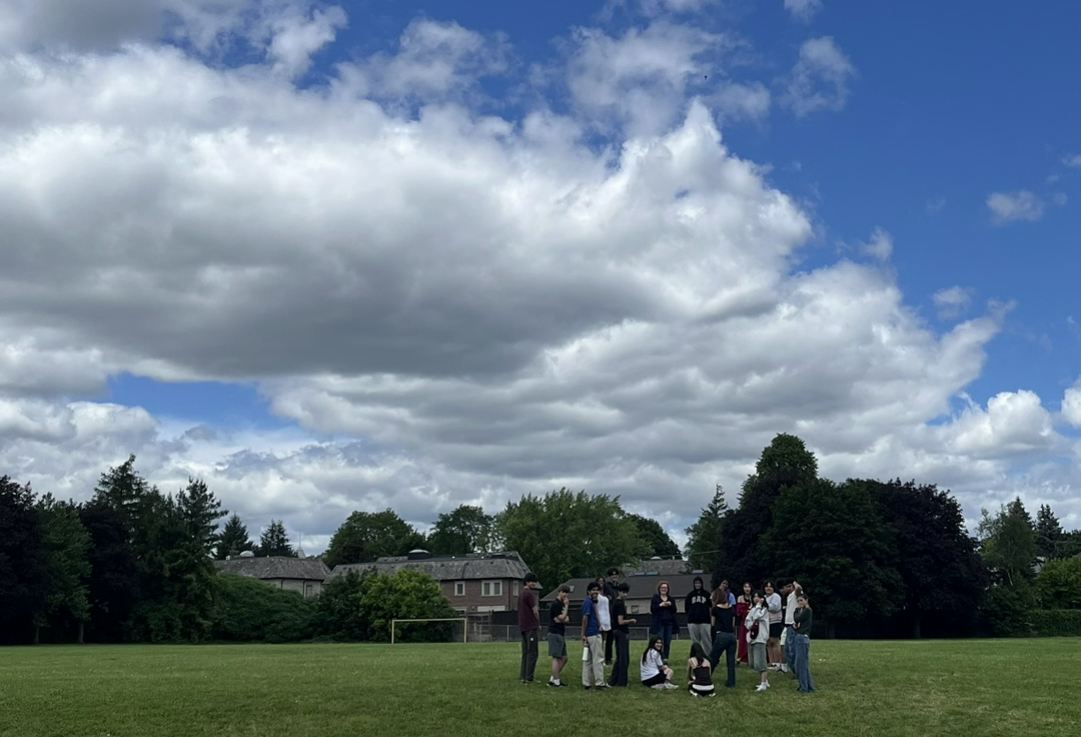
Here’s my amazing last class! We went out to the field for my “goodbye” speech. Thanks Mr. P for the photo!

CHY4U, June 2026, YMCI

Links on This Blog

Updated August 25, 2026

Hello to anyone who uses my blog for world history teaching materials. Some of the links may not work for a while as my TDSB account has been terminated now that I have retired. I hope to have access again at some point and start reorganizing. [I started August 2026 on the first two units of CHW3M and CHY4U].

Thanks for your patience. I promise I won’t stop maintaining my World History blog in order to help teachers and share my reflections on a meaningful career.

Thanks, please also feel free to check out some of my other content such as book reviews.

Risa

#1 Need to Practice

Starting with my strength! In art as in music as in lesson planning, one must repeat, repeat, repeat.

When I first started teaching grade 11 world history back in 1999, I was literally a few pages ahead of the students in the class. I had not taken any world history since high school – and even that was very limited as the teacher had a rather narrow view of what should be taught (western, Christian civilizations).

Interestingly for me, many of my students were members of the classics club at the school and were very keen; though mostly they could recite things in Latin and/or Greek and knew a lot of trivial pursuit factoid types of things. That didn’t help me much.

I had no choice but to dive in. I started reading a lot and using the resources at hand. Our library had a great collection of world history books. Yes, actual books. I also watched a lot of history-related shows on PBS, especially relating to Greece and Rome.

Since I was also teaching Canadian history and grade 12 “modern western civilization” at the same time, my saving factor became lesson planning. Organization has always been one of my best teacher skills, not so much a skill I possess in my personal life. Odd.

Thankfully I inherited a small collection of materials from the previous “ancient” history teacher. After weeding through it for things I liked, I had a sense of what came before me – not that I wanted to copy it wholesale. That’s not my way. I usually do like reinventing the wheel.

I made myself a lesson planning template and started planning units, tests, and then individual lessons. For me, the skill that needs the MOST practice in teaching is lesson planning. I find that almost right out of the gate, new teachers stop planning their lessons. When I host student teachers (teacher candidates, more precisely), they sometimes seem surprised that I want to see detailed lesson plans from them on a daily basis.

Anticipating how things will go is a big plus! These days I cannot imagine how anyone could teach without planning. Lessons need to keep moving swiftly as kids lose interest very quickly, sometimes instantaneously if you can get their interest at all.

Even after 20+ years I still write some lesson plans. When I was going on a short medical leave last year I wrote lessons for all the grade 12 world history classes I’d miss which ended up being the whole course because of surgery postponement!!

One might ask if lesson planning is a facet of creativity at all? I believe it is. It is in the planning where a new or experienced teacher comes up with an idea to make a topic interesting. In history that could be a trial, a role-play, a simulation, a short activity, or as we say today, a minds on. I admit that some of my most creative activities come to me spontaneously in the classroom. However, I don’t think my creativity would be able to kick in if the cognitive load had not already been reduced by doing so much planning.

My Most Creative Plan

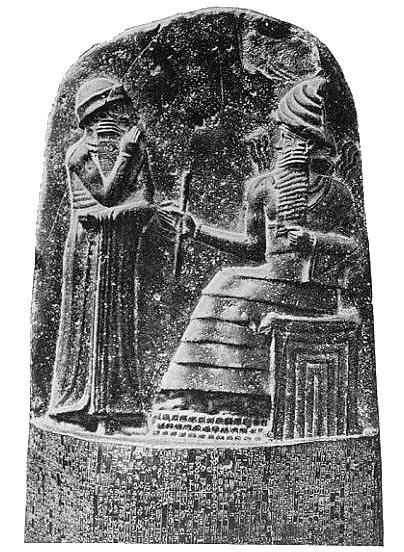
Looking back is hard for me because – ironically – I have a bad memory. That’s bad for a history teacher, but it doesn’t usually affect content. Just events, names, faces in my OWN life. That said, one activity I developed on the topic of Hammurabi’s Code really stands out. The students first analyzed the document (okay, not all 282 laws) looking for ways that specific laws affected different groups of people in society – farmers, merchants, women, the king! They were divided into different groups based on roles on society and each had to come up with either a law they wanted to keep – and the justification for that – or the law that they wanted to ‘amend’ and their proposed revisions. They would then present to the king and his advisors – roles played on a rotating basis by each group of students. The kids would always love in-role activities. Sometimes they got so into it they sent out spies to check on the other groups. I remember it even getting it slightly out of hand as they tried to maintain secrecy until the final reveal of their scripted encounter with the king. Then of course there was always the moment when the king decided if he wanted to punish them for their suggestions!

Did I plan this? Well, I didn’t plan for all the offshoots such as spies and secrecy. But I planned the activity to such a degree that the kids had the freedom to give it a life of their own.

I don’t do this activity anymore for a number of reasons but mostly I am more cautious with role-plays now as I am much more mindful of presentism and the need for students to asses how probable (or not) it would have been for people to think a certain way. On the whole I am much more of an inquiry-based teacher now. However, I still find room for some role-plays such as my Black Death simulation.

Hammurabi’s Code was the basis of a memorable lesson.

Art Parallel

Now, do I practice enough in art to help develop my skills? Because I don’t paint on a daily basis I would say no. This usually results in me overthinking what I should do next because I don’t have a plan. Ultimately, my potential creativity and skill development are hindered before they even got out of the gate.

Having a sketchbook where one can practice is akin to writing a lesson plan. I definitely use my sketchbook. However, I don’t always follow through with a “good” copy, so to speak.

For Teachers

Get yourself a lesson template. In world history, use it to plan the societies you will include in the course, either through direct instruction, group work, or student inquiries. It’s very important to make sure the course is diverse and ever changing.

I use a template such as this to make my plan for what I will teach in a given semester.

For Teachers of World History

Hello, I’m Risa Gluskin. You probably know that since you’ve found this website.

After 25 years of teaching, I am taking a year off to rest, relax, and share my experience. I get a lot of requests through this blog to share my materials. It seems natural to me to expand on that.

I will use this blog to link to future videos, blog posts, links, maybe podcasts, etc. designed to help you teach world history at the high school level. Each topic is driven by a parallel between learning to paint and teaching creatively.

New content will be coming in the new year. Meanwhile, click on the “For Teachers of World History” button at the right of the menu bar above or see the parallels below.

Watch this short intro.

Parallels

  • need to practice (Sept. 12, 2023) – featuring Black Death simulation
  • need to step back and look at your work from a distance + video (Sept. 19, 2023) – featuring Code Noir lessons
  • avoid obsessing over every detail and go with ‘good enough’, not perfection
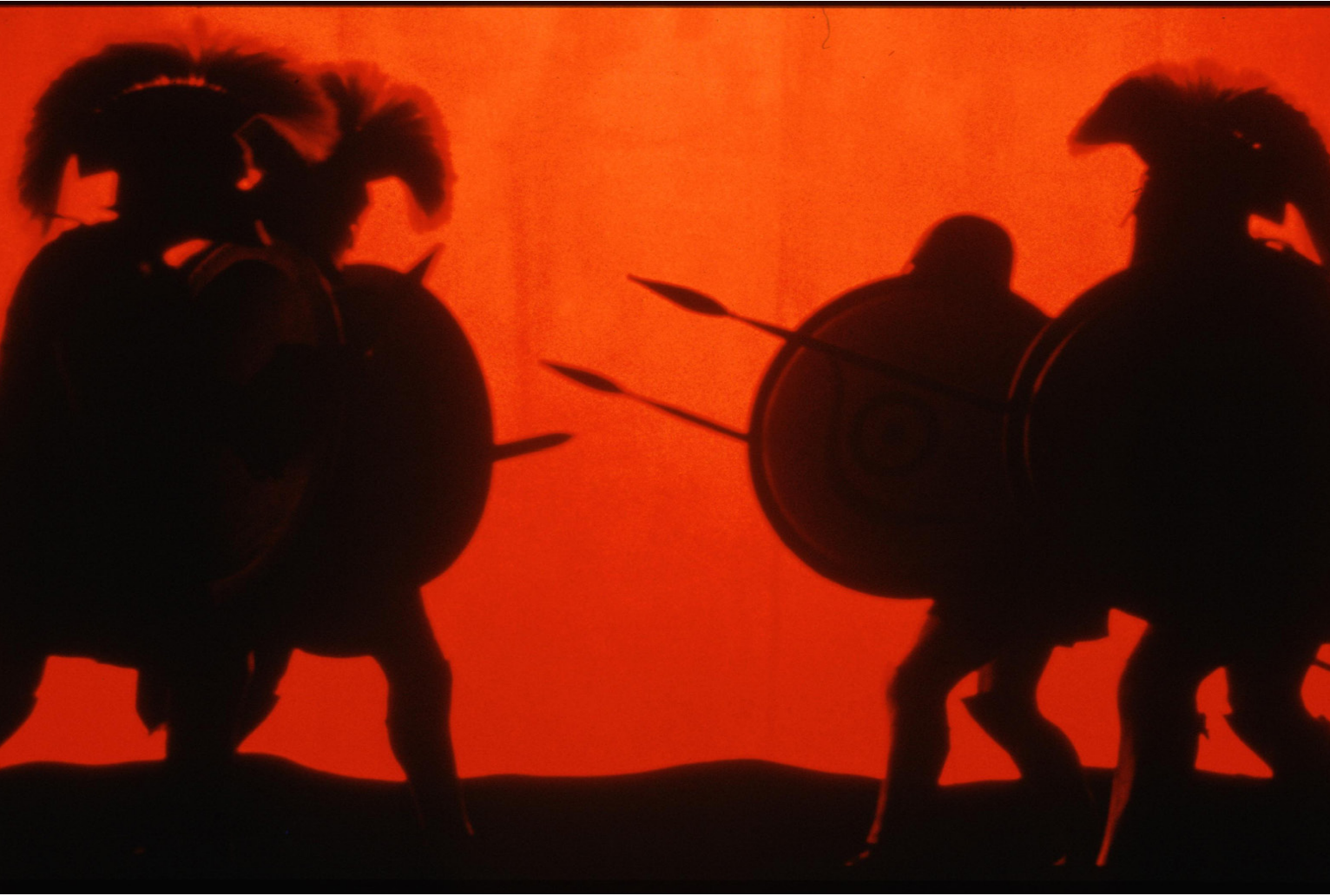
  • pick the right tool for the job (Oct. 17, 2023) – featuring Athens vs. Sparta, Indus Valley, best/worst Roman Emperor, CHW3M Culminating Activity
  • work within the constraints of time, budget (aka reality)
  • know your limits
  • be self-critical to a point + video (Oct. 3, 2023) – featuring Global Gathering (CHY4U Unit 1 Culminating Activity), women in the French Revolution, History of LGBTQ2+ Rights Around the World
  • educate yourself (Nov. 6, 2023) with video to follow
  • take risks, challenges and stretch yourself
  • love what you do