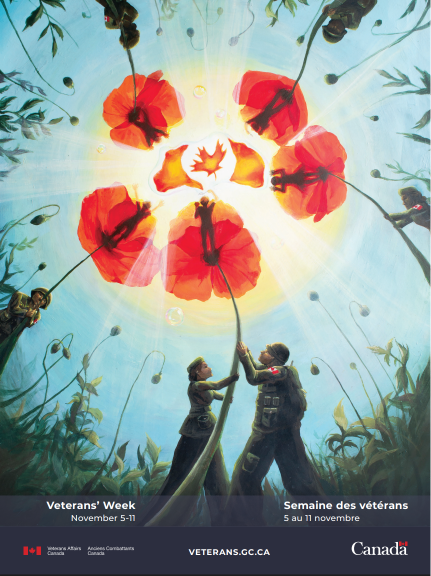
© His Majesty the King in Right of Canada, represented by the Minister of Veterans Affairs, 2026. Poster by Chaelyn Han. https://veterans.gc.ca/en/remembrance/get-involved/remembrance-day-veterans-week/annual-posters/2026-veterans-week-poster
A school is a both a familiar and respectable place to be on Remembrance Day.
Though I am now retired, I chose to go to York Mills CI for the morning assembly, not just because it’s a familiar routine, but because we (I’m still in the we mode when thinking of my former place of employmen) do a good job of making the day about both history and the future. While Canaadians should remember people’s sacrifices in war, of course, we should tie that remembrance to what can be done in the future to make war unnecessary.
That said, I came across an article in the Toronto Star, yesterday, Tuesday, November 10, titled “Remembrance Day schools, get expanded curriculum, Province, urging Educators to encourage poppy wearing teach local perspectives of World Wars” by Kristin Rushowy. Doesn’t sound controversial, does it? But the last paragraph referring to Minister of Education, Paul Calandra’s supposed commemoration reforms, gave me pause:
Calandra has said, the changes “further deepen our shared understanding of the significance of Remembrance Day and ensure every student across the province receives a consistent education on our history.”
Kristin Rushowy, “Remembrance Day schools, get expanded curriculum, Province, urging Educators to encourage poppy wearing, teach local perspectives of World Wars”
As a history teacher, I am not sure what is meant by “consistent education.” In one sense it could mean that schools should no longer be relying on traditional commemorations that centred only on white males. That intended meaning would be fine with me.
Over the years my History Club students and I wrote the scripts for ceremonies, we were constantly looking for expanded perspectives to add: Indigenous soldiers, Japanese and Chinese Canadians, Indo-Canadians, contemporary Canadian soldiers, etc. We looked for primary sources to hear from the people involved, not wanting to just use “In Flanders Fields” by John McCrae, though there is absolutely nothing wrong with that poem. Because I did not teach Canadian history, I learned so much in those research sessions. Last year, the assembly’s director and writer also added the voices of Canadian nurses. This year there was a focus on under-age soldiers. Music choices have always been scrutinized, from John Lennon’s “Imagine” to Mike Ford’s “Creeping Barrage.” This year’s ceremony had a choir singing Simon and Garfunkel’s “Sound of Silence”: an interesting and fresh choice, I thought.
FYI, Mike Ford is a talented local musician (and teacher!!!) who used to go to schools to share his songs that complement the history curriculum. Here’s his website.
On the other hand, “consistent education” could mean something more sinister. Use this poem, this song, this script. Tell this story about Remembrance Day. It would not surprise me if that’s what the Ford government intended given its seeming goal of controlling everything related to public education in this province. That scares me. All teachers should fear this level of control, though I personally think history teaching carries an extra weight in terms of responsibility to constantly renew the content, sources, and perspectives that we teach. History is an ever-changing approach, not one narrative. The single track view of history is how this province (and this country) raised generations of people who had little to no knowledge of Residential Schools and other harms done to Indigenous peoples.
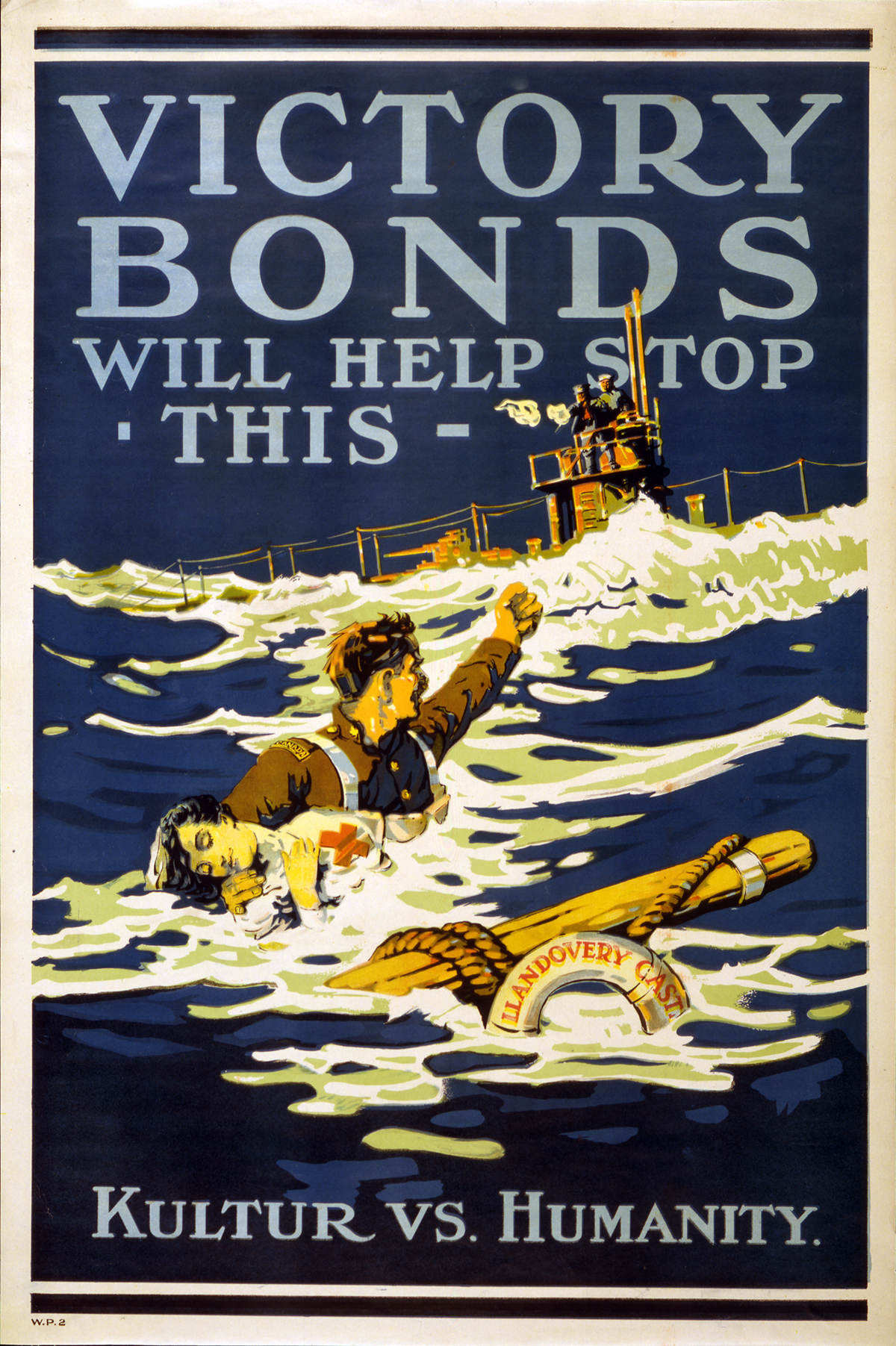
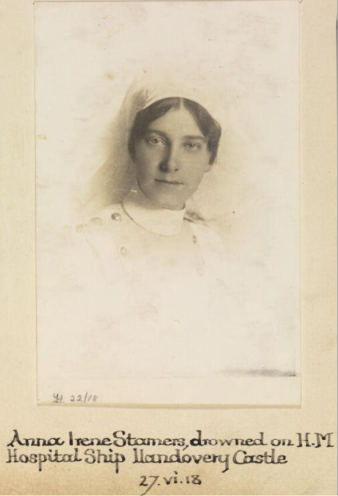
Here’s a new perspective I’ve been learning more about: Canadian nurses during World War One. This Remembrance Day I will lay a poppy for Anna Stamers, one of 14 nurses who died in June 1918 when the hospital ship Llandovery Castle – bringing military casualties back to Canada – was torpedoed by a German submarine. All the nurses died. Anna, who had served in England and France during the war, was on her way back home on leave. Source: Dianne Kelly, Asleep in the Deep: Nursing Sister Anna Stamers and the First World War. Goose Lane Editions, 2021.
This Victory Bonds poster refers to the sinking of the Llandovery Castle.